
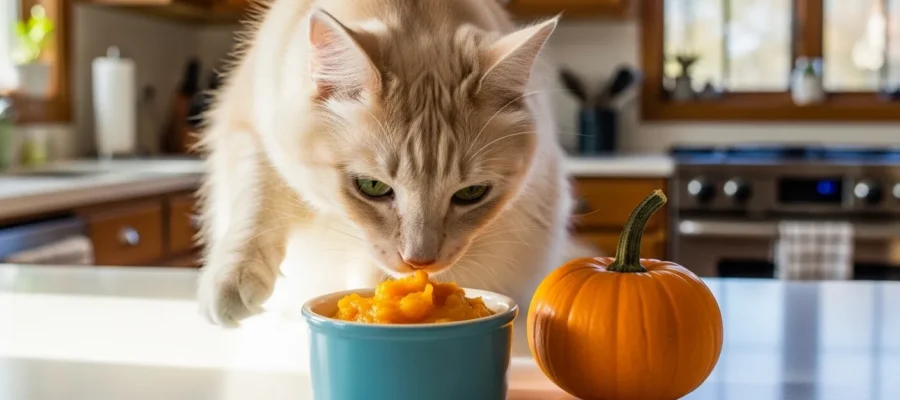
Cats can eat pumpkin. Plain, cooked pumpkin is safe for cats and offers real digestive benefits. The catch is the type — pumpkin pie filling, spiced pumpkin products, and anything with additives can make your cat sick. Stick to 100% pure pumpkin and you’re in good shape.
The Short Answer
Yes, pumpkin is safe for cats. It’s non-toxic, low in calories, and high in fiber. Most vets consider plain pumpkin a solid home remedy for minor digestive issues in cats.
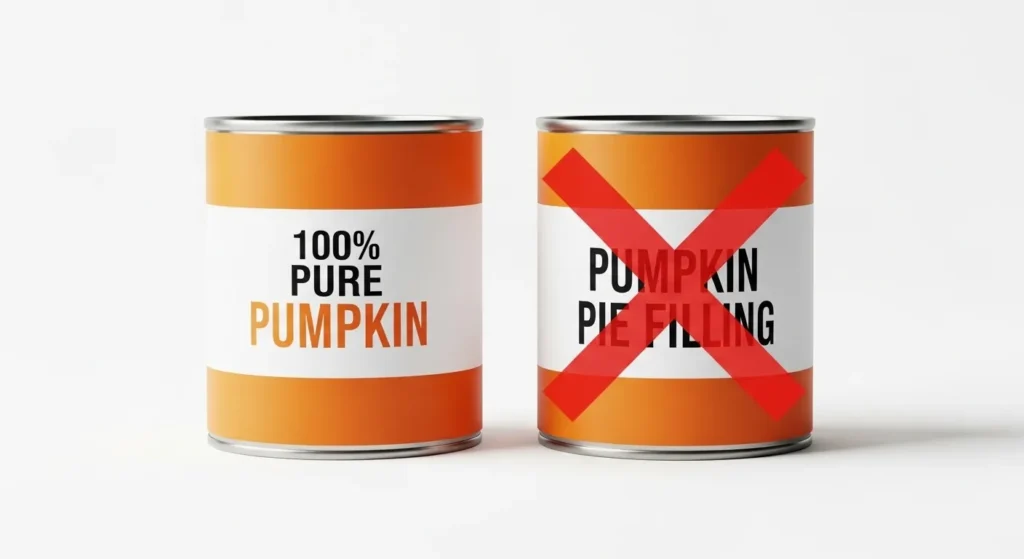
The one rule: read the label. Pure pumpkin puree is fine. Pumpkin pie filling is not. Pie filling contains nutmeg, cinnamon, added sugar, and sometimes xylitol — all of which are harmful to cats. If you’re ever unsure whether a food is safe, the Pet Food Safety Checker can give you a quick answer before you serve anything new.
If the ingredient list says anything other than pumpkin, skip it.
Nutritional Value of Pumpkin for Cats
Pumpkin isn’t a nutritional powerhouse for cats the way it might be for humans — cats are obligate carnivores, so they get most of what they need from animal protein. But pumpkin does add useful support nutrients in small amounts.
Key Nutrients Per Tablespoon of Plain Canned Pumpkin
| Nutrient | Amount (per 1 tbsp) |
|---|---|
| Calories | ~5 kcal |
| Fiber | ~0.5g |
| Vitamin A (beta-carotene) | ~760 IU |
| Vitamin C | ~1mg |
| Vitamin E | ~0.5mg |
| Potassium | ~45mg |
| Water content | ~90% |
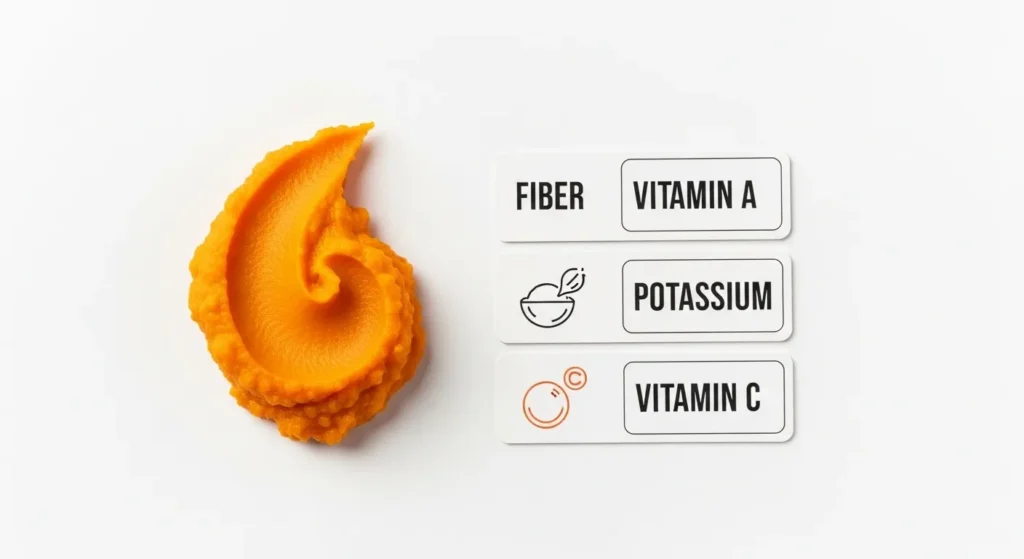
These numbers are modest — which is exactly the point. Pumpkin adds fiber and micronutrients without disrupting the caloric balance of your cat’s diet.
Beta-carotene is the standout. It converts to vitamin A, which supports eye health, immune function, and skin condition. Cats can convert some beta-carotene but are less efficient at it than humans, so this is a supplemental benefit rather than a replacement for animal-sourced vitamin A.
Health Benefits of Pumpkin for Cats
Digestive Regulation
This is the main reason people add pumpkin to their cat’s food. Pumpkin contains both soluble and insoluble fiber — and each type does something different in the gut.
Soluble fiber absorbs water and forms a gel-like substance in the intestine. This slows digestion and firms up loose stools. It’s helpful for cats with diarrhea.
Insoluble fiber adds bulk to stool and speeds transit time through the colon. This is what helps with constipation — it pushes things along.
Most high-fiber foods lean one way or the other. Pumpkin has both in a reasonable balance, which is why it works for both constipation and diarrhea at the same dose. If your cat is throwing up frequently alongside digestive issues, it’s worth reading about why cats keep throwing up to rule out something more serious.
Hairball Reduction
Pumpkin fiber helps move ingested hair through the digestive tract instead of letting it accumulate. It won’t eliminate hairballs entirely, but regular small amounts can reduce frequency — especially in long-haired breeds that groom heavily.
Weight Management
One tablespoon of pumpkin is around 5 calories. It adds volume and fiber to a meal without adding meaningful calories. For overweight cats on a diet, mixing a teaspoon of pumpkin into their food can help them feel fuller without extra energy intake. Pairing this with correct portion sizes matters too — check our guide on how much wet food to feed your cat to make sure you’re not accidentally overfeeding elsewhere.
Hydration
Canned pumpkin is roughly 90% water. Cats are notoriously poor drinkers, and many develop chronic mild dehydration — especially on dry food diets. Adding pumpkin to food is a passive way to increase fluid intake without switching foods entirely. If your cat avoids water consistently, also check how long cats can go without water to understand the risk threshold.
Anal Gland Health
This benefit rarely gets mentioned, but it matters. Cats have two small anal glands that sit on either side of the rectum. These glands are expressed naturally when a cat passes firm, well-formed stool. Soft or loose stool doesn’t create enough pressure to empty them properly.
Impacted anal glands are uncomfortable and can become infected. Adding pumpkin fiber to firm up stool can help the glands express naturally during defecation — reducing the chance of impaction. If your cat scoots, licks at their rear end, or has had anal gland issues before, pumpkin is worth trying.
What Types of Pumpkin Are Safe for Cats?
Canned Pumpkin (100% Pure) — Best Option
This is the easiest and most practical choice. It’s shelf-stable, consistent in texture, and easy to measure. Look for labels that say “100% pure pumpkin” with one ingredient listed: pumpkin.
Libby’s 100% Pure Pumpkin is the most commonly recommended brand by vets. Fruitables also makes pumpkin digestive supplements specifically formulated for pets.
Do not confuse this with canned pumpkin pie filling. The cans look similar. Check the label every time.
Fresh Cooked Pumpkin
Fresh pumpkin — steamed or baked, no seasoning — is safe for cats. Remove the skin and seeds before cooking. Let it cool completely before serving. Mash it to a smooth consistency so it mixes easily into food.
Small pie pumpkins (sugar pumpkins) work better than large carving pumpkins, which tend to be more watery and less flavorful.
Raw Pumpkin
Cats can eat small amounts of raw pumpkin flesh. It’s not toxic. But raw pumpkin is harder to digest and most cats won’t find it appealing. Cooked is better.
Pumpkin Seeds
Plain, raw, or roasted pumpkin seeds (no salt, no seasoning) are safe for cats in very small amounts. Some sources suggest they have mild anti-parasitic properties, though the evidence in cats specifically is limited. If you offer seeds, grind them first — whole seeds are a choking risk and harder to digest. Interestingly, dogs can also eat pumpkin seeds under similar guidelines if you have both pets at home.
Pumpkin Powder
Pumpkin powder is a dehydrated, concentrated form of pumpkin. It’s convenient and has a longer shelf life than canned. Products like Nummy Tum-Tum and Bernie’s Perfect Poop include pumpkin powder as an ingredient.
The dosing is different from canned pumpkin — powder is much more concentrated. Follow the product label. Generally, ¼ teaspoon of powder is roughly equivalent to 1 teaspoon of canned pumpkin.
Pumpkin Pie Filling — Do Not Use
Pumpkin pie filling is not safe for cats. It contains added sugar, salt, and spices including nutmeg and cinnamon. Nutmeg is toxic to cats and can cause tremors, seizures, and central nervous system effects in sufficient amounts. Even if the quantity in pie filling is small, there’s no reason to expose your cat to it.
How Much Pumpkin Should You Give a Cat?
Start small. For most cats, 1–4 teaspoons per day is the standard recommended range. Where your cat falls in that range depends on their size and what you’re treating.
Weight-Based Dosing Guide
| Cat Weight | Starting Dose | Maximum Daily Dose |
|---|---|---|
| Under 5 lbs | ½ tsp | 1 tsp |
| 5–10 lbs | 1 tsp | 2 tsp |
| 10–15 lbs | 1–2 tsp | 3 tsp |
| Over 15 lbs | 2 tsp | 4 tsp |
Start at the lower end. Give it for 2–3 days and watch your cat’s stool consistency. Adjust from there.
For constipation: lean toward the higher end of the range to increase bulk and motility.
For diarrhea: start at the lower end — soluble fiber needs time to absorb water and firm up stool.
For general maintenance (hairballs, anal glands, weight): 1 teaspoon daily is enough for most cats.
How to Introduce It
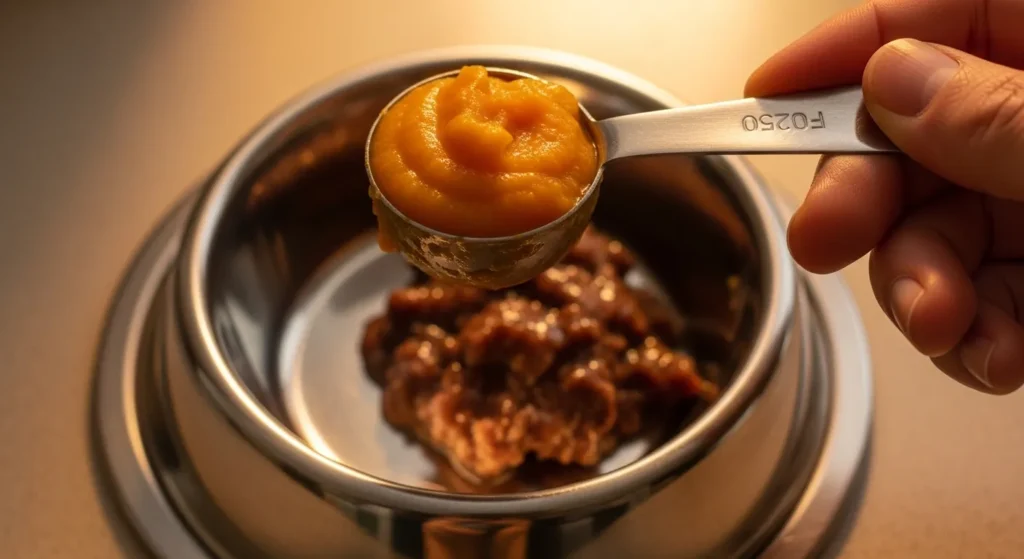
Some cats will eat pumpkin mixed into their food without noticing. Others are more suspicious. Start by adding a small amount — ¼ teaspoon — to wet food. Gradually increase over a few days. If your cat refuses it entirely, see the FAQ section below.
How to Add Pumpkin to Your Cat’s Diet
Mixing Into Wet Food
The easiest method. Spoon the pumpkin directly into your cat’s wet food and stir. The texture blends well and most cats won’t pick it out. If you’re building a more complete homemade diet for your cat, our high-protein cat recipes are worth looking through — pumpkin can be incorporated into several of them as a fiber supplement.
As a Standalone Treat
Some cats will eat plain pumpkin off a spoon or from a small dish. If yours does, that works fine — just measure the dose beforehand.
Making a Simple Pumpkin Topper
Warm a small amount of canned pumpkin slightly (don’t overheat it) and spoon it over dry kibble. The warmth releases some aroma, which can make picky cats more willing to try it. This also adds moisture to a dry food diet. For more ideas on feeding cats affordably and creatively, check out these cheap homemade cat food ideas.
When NOT to Use Pumpkin
Pumpkin helps with minor, situational digestive issues. It is not a treatment for illness.
If your cat has been constipated for more than 48–72 hours, is straining without producing any stool, is vomiting, or seems lethargic — call your vet. These are not pumpkin problems. Pumpkin won’t fix an obstruction, megacolon, or underlying disease. Using it in those situations delays the care your cat actually needs.
Similarly, diarrhea that lasts more than 2–3 days, contains blood, or is paired with weight loss or lethargy needs a vet visit — not more fiber. You can also use the Pet Symptom Checker to get a clearer picture of what your cat might be dealing with before calling the clinic.
Pumpkin is a supplement, not a diagnosis. If the problem is recurring or worsening, get to a vet.
Risks and Side Effects
Overfeeding
Too much fiber causes problems. Excess pumpkin can lead to loose stool, gas, and bloating. It can also interfere with nutrient absorption if given in large quantities consistently. Stick to the dosing guidelines above.
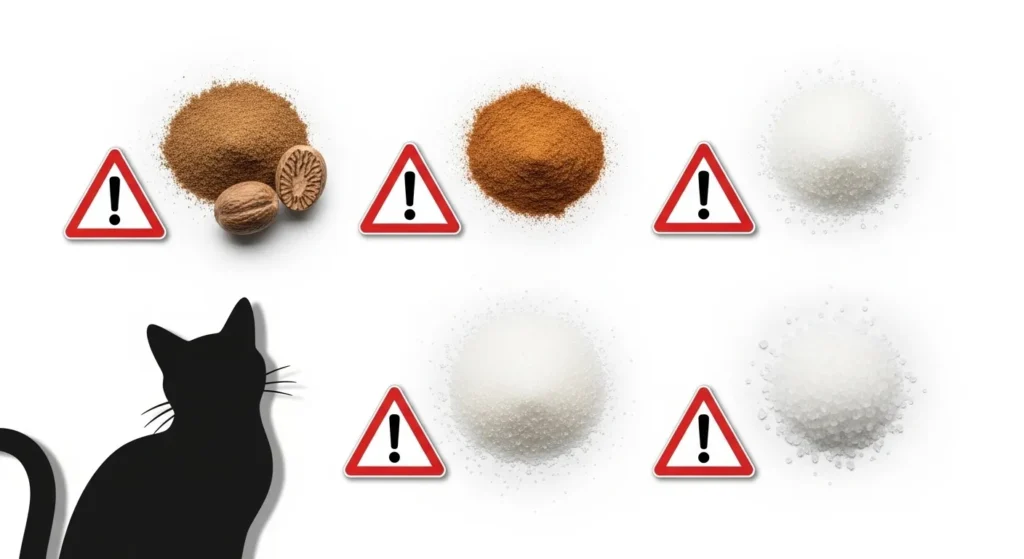
Toxic Additives to Avoid
- Nutmeg — toxic to cats, causes CNS effects
- Cinnamon — irritant, can cause mouth and GI irritation
- Xylitol — highly toxic, causes rapid blood sugar drop
- Added salt — contributes to sodium overload, particularly dangerous for cats with kidney or heart conditions
- Added sugar — unnecessary and contributes to obesity and dental issues
None of these belong in your cat’s pumpkin. If you see any of them on the label, don’t buy it. It’s also worth knowing which other foods carry similar risks — our guide on can cats eat grapes and can cats eat avocado cover two of the most commonly misunderstood food dangers for cats.
Allergic Reactions
Pumpkin allergies in cats are rare. If you see vomiting, excessive itching, facial swelling, or difficulty breathing after introducing pumpkin, stop immediately and contact your vet.
Frequently Asked Questions
Can kittens eat pumpkin?
Yes, kittens can eat small amounts of plain pumpkin. Start with ¼ teaspoon and monitor their stool. Their digestive systems are more sensitive than adult cats, so keep amounts small. If you’re dealing with a digestive issue in a very young kitten (under 8 weeks), talk to a vet rather than self-treating. You might also find it helpful to know when cats stop growing to understand where your kitten is in their development.
Can cats eat pumpkin every day?
Yes, small daily amounts are fine for most cats. One teaspoon per day is a common maintenance dose for things like hairball control or anal gland support. If you’re giving it for a specific issue like constipation, you can stop once the problem resolves and return to occasional use.
Can cats eat pumpkin skin or leaves?
The skin is tough and hard to digest — skip it. Pumpkin leaves are not toxic but are fibrous and offer no real benefit. Neither is worth including. Stick to the cooked flesh.
My cat won’t eat pumpkin — what now?
Try warming it slightly. Mix it into a stronger-smelling food like tuna or sardine-based wet food. Try a different texture (smooth puree vs. slightly chunky). If your cat flatly refuses, pumpkin powder mixed into food is sometimes more palatable since the flavor is less pronounced. Picky eating can sometimes signal other things — if your cat is refusing food broadly, check out why your cat might be meowing so much or whether something is bothering them.
Can cats eat pumpkin seeds?
Yes, in small amounts. Seeds must be plain — no salt, no oil, no spices. Grind them before serving. They’re not a necessary part of the diet and most cats don’t benefit much from them, but they aren’t harmful in small quantities.
Can cats eat other similar foods safely?
Pumpkin is one of several cat-safe foods worth knowing about. Cats can also eat blueberries, cooked chicken, broccoli in small amounts, and rice as occasional dietary additions. For a broader overview, our guide on what fruits cats can eat is a good starting point.
The Bottom Line
Pumpkin is safe for cats. Plain, cooked, or canned (100% pure) pumpkin can genuinely help with constipation, diarrhea, hairballs, weight management, hydration, and even anal gland health. Keep doses between 1–4 teaspoons per day depending on your cat’s size. Never use pumpkin pie filling. Always check the label.
It’s not a cure-all. For anything beyond minor, short-term digestive upset, see your vet. But as a simple, low-risk dietary addition, pumpkin earns its reputation as one of the more useful things you can add to a cat’s bowl. If you’re ever unsure about a specific symptom your cat is showing alongside digestive changes, the Pet Symptom Checker is a fast way to assess whether something needs professional attention.