
The Direct Answer
A cat can survive without water for 2 to 4 days at the absolute maximum. But survival and safety are two different things.
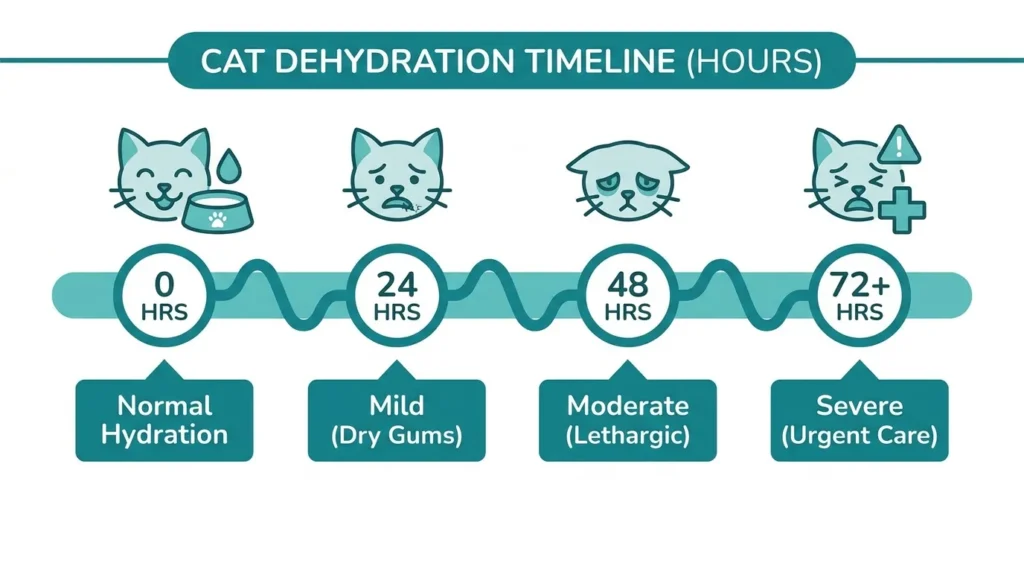
Dehydration kicks in within 24 hours of a cat stopping water intake. After that point, organ stress begins. The kidneys are hit first. By 48 hours, the damage compounds. By 72 hours and beyond, you’re in genuine emergency territory.
That 24-hour mark is the number to remember. Not 3 days. Not “a couple of days.” One day without water, and your cat’s body is already under strain.
If you’re also worried your cat isn’t eating, the situation becomes more urgent — read our guide on how long cats can go without eating for the full picture on combined food and water deprivation.
What Happens to a Cat’s Body Without Water
Cats are biologically descended from desert-dwelling wildcats. Their kidneys are highly efficient at concentrating urine to conserve moisture. That’s why they can tolerate mild dehydration better than dogs — and why their urine often smells potent.
But that desert adaptation has limits. Here’s what actually happens inside your cat’s body as hours without water pass.
0–24 Hours
Your cat’s body begins pulling water from internal tissues to maintain blood volume. Urine becomes more concentrated. No visible symptoms appear yet in most healthy adult cats. This window is still manageable, especially if your cat has been eating wet food.
24–48 Hours
Visible dehydration signs begin to appear. The skin loses elasticity. Gums start to feel dry or tacky instead of moist. Your cat may become less active and eat less. Kidney filtration efficiency drops as blood flow decreases.
48–72 Hours
The body is now under significant organ stress. Blood pressure drops. Toxins that the kidneys normally filter — including waste products like urea — start accumulating in the bloodstream. Lethargy becomes pronounced. Some cats stop grooming. Eyes may look dull or slightly sunken.
72+ Hours — Emergency
This is organ failure territory. Acute kidney injury is a genuine risk at this stage. Without veterinary intervention — typically intravenous (IV) fluids — the situation becomes life-threatening fast. Call a vet immediately if your cat has gone this long without water.
How Much Water Does a Cat Actually Need Per Day?
The general veterinary guideline is 40–70 ml of water per kilogram of body weight per day.
For a typical 5 kg (11 lb) cat, that’s roughly 200–350 ml — about one to one and a half cups daily.
But here’s the catch: cats on wet food diets get a significant portion of that from their meals. Wet food is roughly 70–80% water. A cat eating wet food twice a day may only need to drink a small amount from a bowl to hit their daily requirement.
Dry kibble-only cats, on the other hand, get almost no moisture from food and need to compensate entirely through drinking. Studies show many of them fall short anyway, which puts them at higher chronic dehydration risk.
If you’re unsure how much wet food your cat should be eating, our wet food feeding guide breaks it down by weight and age.
Factors That Change How Long a Cat Can Last Without Water
Not every cat hits the same timeline. Several factors push the danger zone earlier.
Kittens
Kittens are far more vulnerable than adult cats. A kitten that hasn’t had water for 12 hours needs veterinary attention — not monitoring, not waiting to see. Their small body mass means they dehydrate faster, and the consequences arrive harder.
Senior Cats
Older cats often have reduced thirst sensation. They may not seek water even when they need it. A 10-year-old cat going 24 hours without water needs the same urgency you’d give a kitten.
Cats With Chronic Health Conditions
Three conditions accelerate dehydration dramatically:
Chronic kidney disease (CKD): Damaged kidneys can’t concentrate urine effectively, so the cat loses more water through urination. Dehydration develops faster and harder.
Diabetes mellitus: Elevated blood glucose causes increased urination, which depletes water reserves rapidly.
Hyperthyroidism: Increases metabolic rate and fluid turnover, making dehydration arrive sooner.
If your cat has any of these conditions and stops drinking, don’t wait 24 hours to call the vet. Call immediately.
Vomiting or Diarrhea
A cat vomiting or experiencing diarrhea is losing body water through multiple channels simultaneously. A cat in this state can become severely dehydrated within hours, not days. If your cat keeps throwing up and isn’t drinking, treat it as an emergency.
Hot Weather and Heated Indoor Environments
Temperature directly affects how fast a cat loses water through respiration and minor sweating. In summer heat or a dry, centrally heated home in winter, your cat’s daily water requirement increases. A cat that barely manages hydration in cool weather can tip into dehydration faster than you’d expect on a hot day.
How to Check if Your Cat Is Dehydrated Right Now
You don’t need a vet visit to do a basic dehydration check at home. Two tests give you a solid read within 30 seconds.
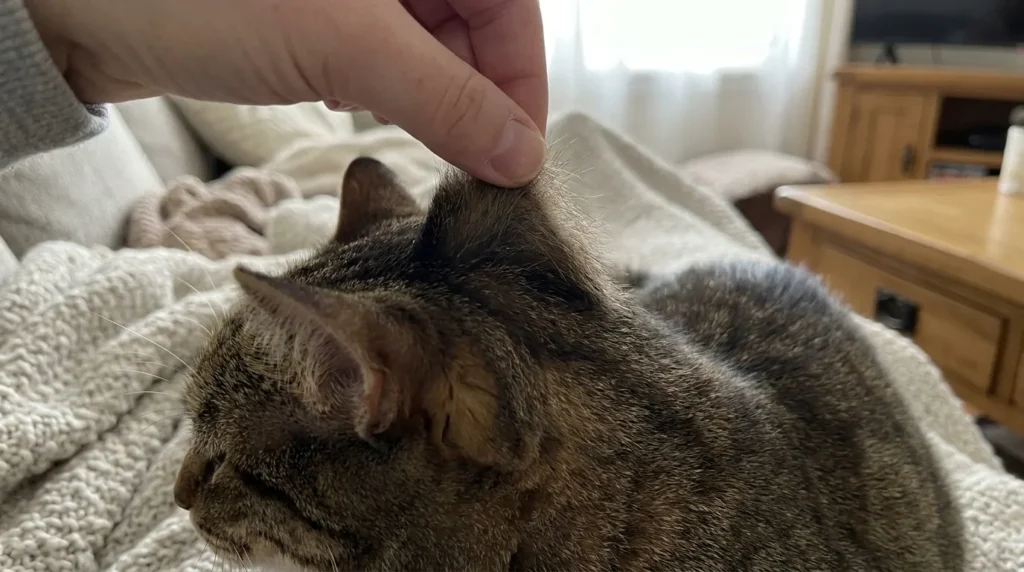
The Skin Tent Test
Gently pinch the loose skin at the back of your cat’s neck between two fingers and release. In a well-hydrated cat, the skin snaps back flat within one second. If the skin rises slowly, forms a “tent” shape, or stays elevated for two or more seconds, your cat is dehydrated.
The Gum Check
Run a clean fingertip along your cat’s upper gum line. Healthy gums are wet and slick. Dehydrated gums feel dry, sticky, or tacky. Color matters too — pale or grayish gums alongside dryness can indicate something more serious than dehydration alone.
Other Signs to Watch
- Eyes that look dull or sunken rather than bright
- Noticeably reduced urination or very dark-colored urine
- Lethargy — less movement than normal, unwillingness to play
- Loss of appetite (eating and drinking problems often travel together)
- Excessive drooling, which can signal nausea or oral pain reducing water intake
If you’re seeing any combination of these, use our pet symptom checker to help triage what you’re observing before calling your vet.
When Not to Panic
Not every cat that skips water for a few hours is in danger.
If your cat eats wet food regularly and seems normal in every other way, a day without visible drinking is usually fine. They’re likely getting adequate moisture through their meals.
Outdoor cats drink from sources you never see — puddles, garden water features, neighbors’ bowls. If your outdoor cat hasn’t touched the indoor bowl today, that tells you very little.
Also worth knowing: many cats strongly dislike still or stale water. Some refuse to drink from a bowl placed near their food. Some only drink from a running tap. If your cat hasn’t had water recently, rule out preference issues before assuming illness.
That said — curious about why cats are so resistant to water in general? The biology behind it goes back further than most people realize.
When to Call the Vet — Non-Negotiable Thresholds
Call your vet same day if:
- Your cat hasn’t drunk anything in 24+ hours and is on a dry food diet
- Your cat is showing two or more dehydration signs simultaneously
- Your cat is vomiting or has diarrhea and isn’t drinking
- Your cat is a kitten and has skipped water for 12 hours
- Your cat has kidney disease, diabetes, or hyperthyroidism and water intake has dropped
- Your cat is lethargic and not responding normally
Call for emergency care if your cat hasn’t had water for 72 hours, is unresponsive, or has pale/white gums.
How to Help Your Cat Drink More Water
Once your cat is out of the danger zone, prevention matters. Chronic low water intake causes problems over time — kidney disease, bladder stones, and urinary tract infections are all linked to long-term dehydration.
Switch to wet food or add it to rotation. This is the single most effective way to increase a cat’s daily water intake. Wet food delivers hydration passively — your cat doesn’t have to decide to drink. Our guide to how much wet food to feed your cat can help you work out appropriate portions.
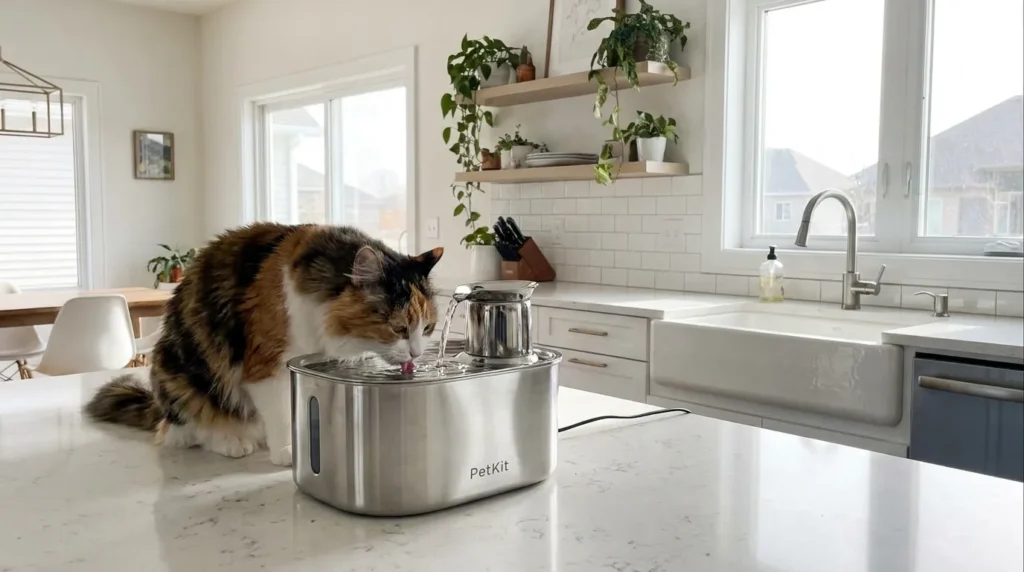
Use a circulating water fountain. Many cats ignore still water bowls but will drink readily from moving water. It appeals to their instinct to seek flowing water in the wild — and it also stays fresher. This is one purchase that genuinely moves the needle on cat hydration.
Place water bowls away from the food bowl. Some cats won’t drink near their food. Try placing a second bowl in a different room.
Change the water daily. Cats are sensitive to smell. Water that’s been sitting for 24 hours may have absorbed odors from the environment or from the bowl itself. Fresh water every day makes a real difference.
Try different bowl materials. Some cats refuse plastic bowls (which can retain odor) but drink fine from ceramic or stainless steel.
What Vets Do for a Dehydrated Cat
If your cat needs treatment, the vet will assess severity through a physical exam — checking gum moisture, skin elasticity, and overall responsiveness. For moderate dehydration, subcutaneous (subQ) fluids are injected under the skin and absorbed gradually over several hours. This is often done in-clinic in 15–20 minutes.
For severe dehydration, intravenous (IV) fluids are administered directly into a vein, rehydrating the cat quickly while monitoring blood pressure and kidney function. Blood tests — specifically BUN (blood urea nitrogen) and creatinine levels — tell the vet how hard the kidneys have been working.
Most cats respond well to IV or subQ fluid therapy when caught before the 72-hour mark. The earlier treatment starts, the faster and more complete the recovery.
Final Word
The safe window before a cat needs water is 24 hours — not 3 days, not 2 days. One day. That’s when dehydration begins and organ stress follows.
Kittens, seniors, and cats with kidney disease or diabetes hit that limit even sooner. And any cat already vomiting or experiencing diarrhea is on an accelerated clock.
Keep fresh water available at all times. Know how to run the skin tent and gum tests. If anything looks off and it’s been over 24 hours without drinking — call your vet. That’s not overreacting. That’s how you keep a cat healthy.