
No, dogs cannot have Down syndrome. This is not a matter of debate — it is a genetic impossibility rooted in the fundamental difference between human and canine chromosomes. But that direct answer is only the beginning. If your dog has unusual physical features, stunted growth, or developmental delays, something real may still be happening. Understanding what it is matters.
This guide covers why Down syndrome can’t occur in dogs, which conditions produce similar symptoms, how vets diagnose them, and what treatment looks like.
What Is Down Syndrome?
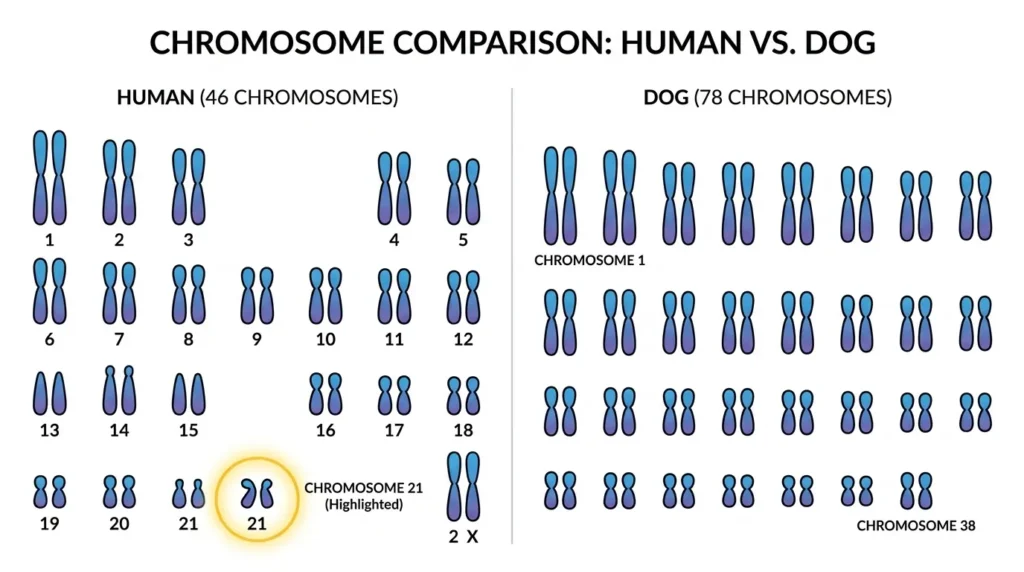
Down syndrome is a chromosomal condition. In a typical human cell, there are 23 pairs of chromosomes — 46 in total. Down syndrome occurs when there is a full or partial extra copy of chromosome 21, bringing the total to 47. That additional genetic material disrupts normal development across multiple body systems.
How Chromosome 21 Causes the Condition
The extra chromosome 21 affects gene expression in ways that can cause intellectual disability, low muscle tone (hypotonia), distinct facial features, and congenital heart defects. According to the National Down Syndrome Society, it affects approximately 1 in every 700 babies born in the United States.
The condition exists in three forms: trisomy 21 accounts for 95% of cases, while translocation and mosaic Down syndrome make up the remainder. All three involve extra chromosome 21 material disrupting normal gene dosage.
Why Dogs Cannot Have Down Syndrome
Dogs have 39 pairs of chromosomes — 78 total. Humans have 23 pairs, 46 total.
Down syndrome requires the duplication of chromosome 21 within a human genome. Dogs do not have a chromosome 21. Their genome is structured entirely differently from ours. The chromosomes in a dog’s cells do not map to human chromosomes on a one-to-one basis, which means trisomy 21 — as a biological event — simply cannot occur in a dog.
The Chromosome Count Difference
Humans and dogs share roughly 85% of their DNA. But that similarity doesn’t mean chromosomes are arranged the same way. Shared genes are distributed across a fundamentally different chromosomal architecture in dogs. Any duplication event in a dog’s genome would affect entirely different genes than those disrupted in Down syndrome, producing entirely different effects.
What Happens When Dog Chromosomes Duplicate
Chromosomal abnormalities do occur in dogs. When they happen during early development, they typically cause embryonic death — the pregnancy fails before it becomes visible. In rare cases where an affected puppy survives to birth, the lifespan is usually very short.
There are no peer-reviewed veterinary case reports documenting a condition biologically equivalent to human trisomy 21 in dogs. It has never been diagnosed.
Conditions in Dogs That Look Like Down Syndrome
Several congenital and developmental conditions in dogs produce symptoms that closely resemble Down syndrome. These are real, diagnosable medical issues — and many are treatable. Recognizing them matters.
Congenital Hypothyroidism
This is the condition most frequently confused with Down syndrome in dogs. It occurs when a puppy’s thyroid gland fails to produce adequate thyroid hormone at birth or in early life.
Thyroid hormones regulate growth, metabolism, and brain development. Without them, puppies develop slowly and incompletely. The resemblance to Down syndrome can be striking.
Signs include:
- Small stature and stunted growth compared to littermates
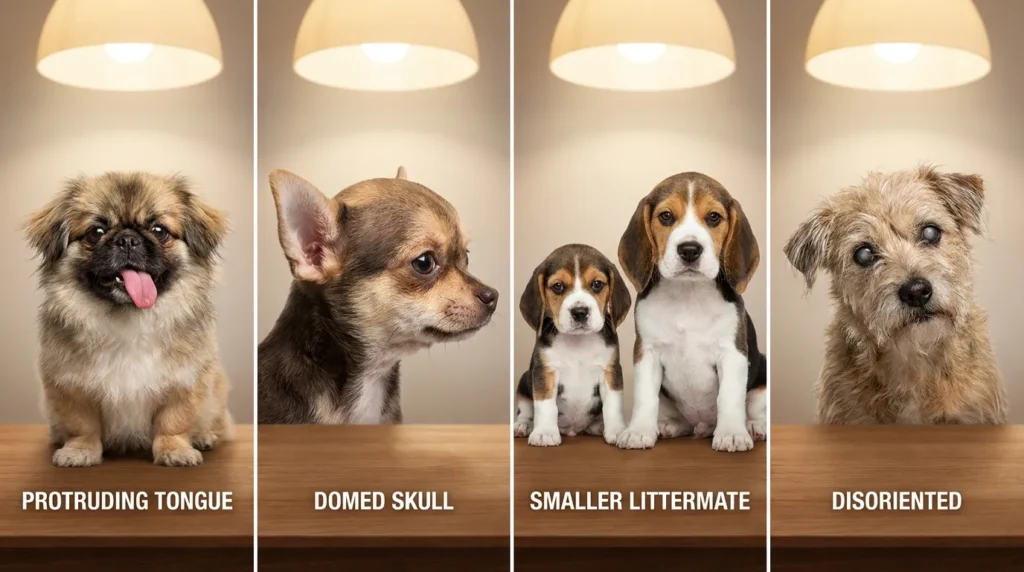
- Large, protruding tongue
- Short, thick limbs
- Poor muscle tone across the body
- Cognitive and learning delays
- Delayed eye and ear opening in newborns
- Lethargy and low energy
The condition is treatable with lifelong oral thyroid hormone supplementation (levothyroxine). Dogs diagnosed early typically respond well and improve noticeably within weeks. If your dog isn’t growing at an expected rate, it helps to understand when dogs actually stop growing and what falls outside the normal range.
Pituitary Dwarfism
Pituitary dwarfism results from a failure of the pituitary gland to secrete adequate growth hormone. The dog remains proportionately small — unlike skeletal dwarfism — and retains puppy-like features into adulthood.
Associated complications include kidney disease, dental abnormalities, and hearing loss. It follows a recessive hereditary pattern and is seen most commonly in German Shepherds and Saarloos Wolfdogs. Genetic testing is available for breed-specific screening.
Treatment options are limited but include growth hormone therapy (where available), thyroid supplementation, and sex hormone replacement to address secondary deficiencies.
Congenital Hydrocephalus
Hydrocephalus is an abnormal accumulation of cerebrospinal fluid inside the brain. The fluid pressure causes brain tissue compression and a visibly enlarged, dome-shaped skull.
Signs include:
- Rounded, domed skull
- Eyes positioned downward or outward (the “sunset sign”)
- Seizures
- Slow learning and disorientation
- Vision impairment
- Poor coordination
Toy breeds — particularly Chihuahuas, Yorkshire Terriers, and Maltese — carry a documented higher predisposition to this condition. Mild cases are managed with corticosteroids and diuretics to reduce fluid production. Severe cases may require surgical placement of a ventriculoperitoneal shunt.
Portosystemic Shunt (PSS)
A portosystemic shunt is an abnormal blood vessel that bypasses the liver, routing blood — and the toxins it carries — directly into general circulation. The liver doesn’t filter waste products, and the brain is repeatedly exposed to ammonia and other metabolic byproducts.
Symptoms of PSS can closely mimic neurological or developmental disorders:
- Stunted growth and low body weight
- Disorientation, circling, or staring into space
- Seizures, particularly after meals when toxin load peaks
- Poor muscle development
- Behavioral changes that owners often mistake for personality quirks
PSS is treated surgically. Ligation of the abnormal vessel achieves resolution in 85–95% of cases involving single extrahepatic shunts. Medical management using dietary protein restriction and ammonia-reducing medications can reduce symptoms when surgery isn’t possible.
Signs to Watch For in Your Dog
If you’re concerned about your dog’s development, here are the specific signs that warrant veterinary evaluation.
Physical Signs
- Smaller than littermates at the same age, with no obvious explanation
- Disproportionately short or thick limbs relative to body size
- A tongue that consistently protrudes from the mouth
- Flat, broad facial structure
- Wide-set or downward-angled eyes
- A noticeably domed or enlarged skull
- Soft, low muscle tone — the dog feels floppy when lifted
- Dry, dull coat or abnormal skin
Behavioral and Cognitive Signs
- Slow to respond to sounds or name
- Difficulty learning behaviors that other dogs pick up quickly
- Confusion or disorientation, especially after meals
- Circling behavior or episodes of staring blankly
- Poor coordination or frequent stumbling
- Unusual shaking or tremors — if you’re noticing this, it’s worth reviewing the common causes of shaking in dogs to understand the range of possibilities
Some pet owners also ask whether dogs can be autistic when they notice behavioral differences — another instance where a human neurological label gets applied to dogs, with its own important scientific nuance worth reading.
Breeds at Higher Risk
Certain breeds have a higher documented incidence of conditions that produce Down syndrome-like symptoms:
- Chihuahuas, Yorkshire Terriers, Maltese — congenital hydrocephalus
- German Shepherds, Saarloos Wolfdogs — pituitary dwarfism
- Yorkshire Terriers, Irish Wolfhounds — portosystemic shunt
If you’re still selecting a dog and want to factor health predispositions into your decision, the dog breed quiz can help you find breeds that match your lifestyle and care capacity.
How Vets Diagnose These Conditions
No single test covers all developmental disorders. Vets typically work through a combination of steps.
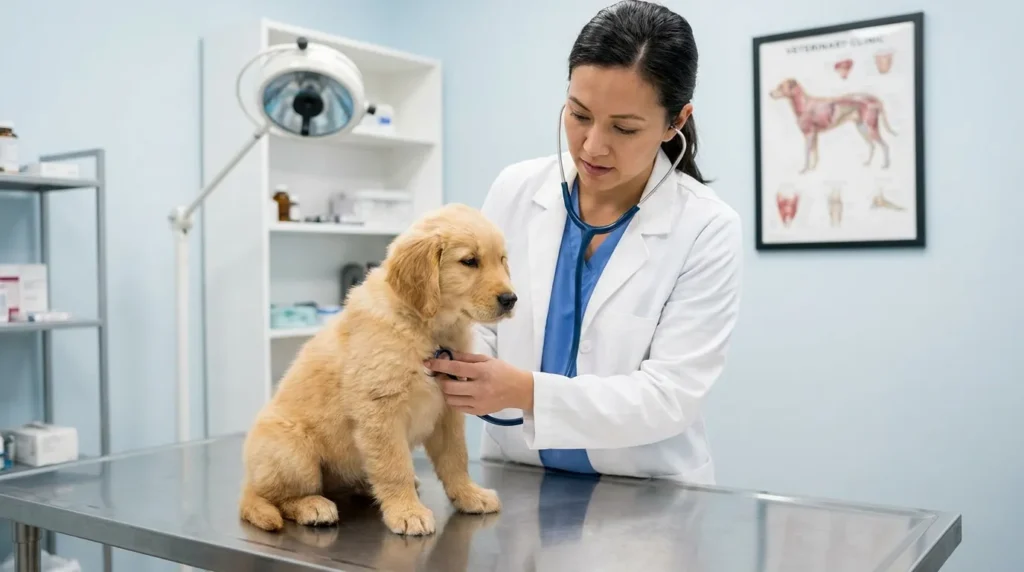
Physical examination comes first. The vet assesses body proportions, muscle tone, reflexes, skull shape, eye positioning, and neurological responses.
Blood tests check thyroid hormone levels (T4 and TSH for hypothyroidism), liver function markers, and blood ammonia levels — a key indicator for portosystemic shunt.
Imaging adds structural detail. X-rays evaluate bone proportions and growth plate development. MRI or CT scans assess brain structure and identify hydrocephalus or shunting abnormalities.
Genetic testing is available for specific hereditary conditions, including pituitary dwarfism screening in German Shepherds.
If your dog is showing multiple unusual signs, using our pet symptom checker before your appointment can help you organize observations clearly and flag which symptoms are clinically most relevant.
Treatment Options and What to Expect
Treatment is condition-specific. There is no universal protocol for developmental disorders in dogs.
Congenital hypothyroidism is managed with daily oral levothyroxine. Most affected dogs show visible improvement — better energy, improved muscle tone, and more normal behavior — within 4–8 weeks of starting treatment. The medication continues for life.
Pituitary dwarfism carries a more guarded long-term prognosis. Growth hormone therapy exists but remains expensive and difficult to access outside specialist centers. Secondary hormonal deficiencies are managed with thyroid and sex hormone supplementation.
Congenital hydrocephalus — mild cases respond to corticosteroids and diuretics. Severe or progressive cases require surgical shunting, which can significantly reduce brain pressure and improve neurological function.
Portosystemic shunt — surgical ligation is the most effective treatment, with success rates of 85–95% for single extrahepatic shunts in otherwise healthy dogs. Medical management reduces symptom severity but doesn’t correct the underlying abnormality.
It’s also worth noting that some dogs with hereditary developmental conditions may have co-existing heart issues. If your dog has been diagnosed with a congenital condition, ask your vet about screening for dilated cardiomyopathy, which has a hereditary component in several breeds and can be present alongside other genetic disorders.
When to Call Your Vet
Contact your vet if your dog or puppy shows any of the following:
- Visibly smaller than littermates without a clear reason
- A tongue that consistently extends beyond the mouth
- A rounded, dome-shaped skull
- Uncoordinated movement, repeated circling, or seizures
- Behavioral confusion — especially after meals
- Delayed developmental milestones in puppies (late eye opening, delayed hearing response)
- A generally “floppy” feel from poor muscle tone
Timing matters. Conditions like congenital hypothyroidism are significantly more responsive to treatment when caught in early puppyhood. Every week of untreated hormonal deficiency allows secondary neurological damage to progress.
One of the most common mistakes dog owners make is interpreting unusual appearance or behavior as a personality trait instead of a medical signal. If something seems off, a vet visit is always the right call.
Frequently Asked Questions
Do dogs have chromosome 21? No. Dogs have 39 pairs of chromosomes (78 total), arranged in a genome structure that doesn’t include a chromosome 21. There is no canine equivalent to the human chromosome 21.
Can inbreeding cause Down syndrome-like symptoms in dogs? Inbreeding doesn’t cause Down syndrome specifically, but it significantly raises the risk of chromosomal abnormalities and hereditary disorders. Heavily inbred dogs have a higher incidence of developmental defects, some of which produce symptoms that overlap with what humans associate with Down syndrome.
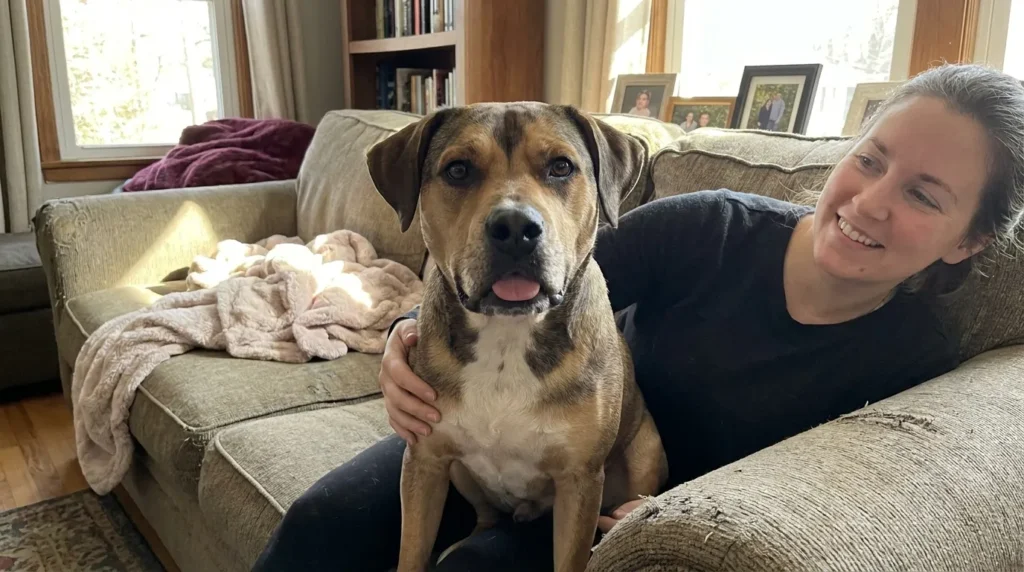
What does a dog with Down syndrome-like symptoms look like? Common physical signs include a large protruding tongue, shortened limbs disproportionate to body size, a flat broad face, wide-set or downward-angled eyes, a domed skull, and noticeably small stature compared to same-age dogs. These features point toward conditions like congenital hypothyroidism, hydrocephalus, or pituitary dwarfism — not Down syndrome itself.
Can these conditions be treated? Most can be managed effectively. Congenital hypothyroidism responds well to hormone therapy. Portosystemic shunt has high surgical success rates. Hydrocephalus can often be controlled medically or with surgery. Pituitary dwarfism has fewer options but can be partially managed with supplementation.
Is there a dog equivalent of Down syndrome? No direct equivalent exists. Dogs can experience chromosomal abnormalities, but none are genetically equivalent to human trisomy 21. Congenital hypothyroidism, pituitary dwarfism, hydrocephalus, and portosystemic shunt are the closest clinical parallels — but they are caused by completely different biological mechanisms.