
Yes, cats fart. It’s real, it happens, and most of the time it’s completely normal. Cat flatulence gets less attention than dogs’ because it tends to be silent and infrequent — but that doesn’t mean it isn’t happening.
If you’ve caught a whiff near your cat and wondered what’s going on, this covers everything: why cats pass gas, what causes it, which foods make it worse, and the signs that something more serious is going on.
Do Cats Actually Fart?
Cats do fart. Gas builds up in the digestive tract the same way it does in humans and dogs — through swallowed air and the natural fermentation of food in the gut. That gas has to go somewhere, and it exits as flatulence.
Most cat owners don’t notice it much. Cat farts are usually silent. They’re also infrequent compared to dogs. A healthy cat might pass gas a few times a day without you ever knowing. The odor is usually mild — when you do smell it, it tends to be brief.
Cats have a lot of quirky biology worth understanding. If you’re curious about other things your cat’s body does, do cats sweat? is another question most owners have never thought to ask.
What Causes Gas in Cats?
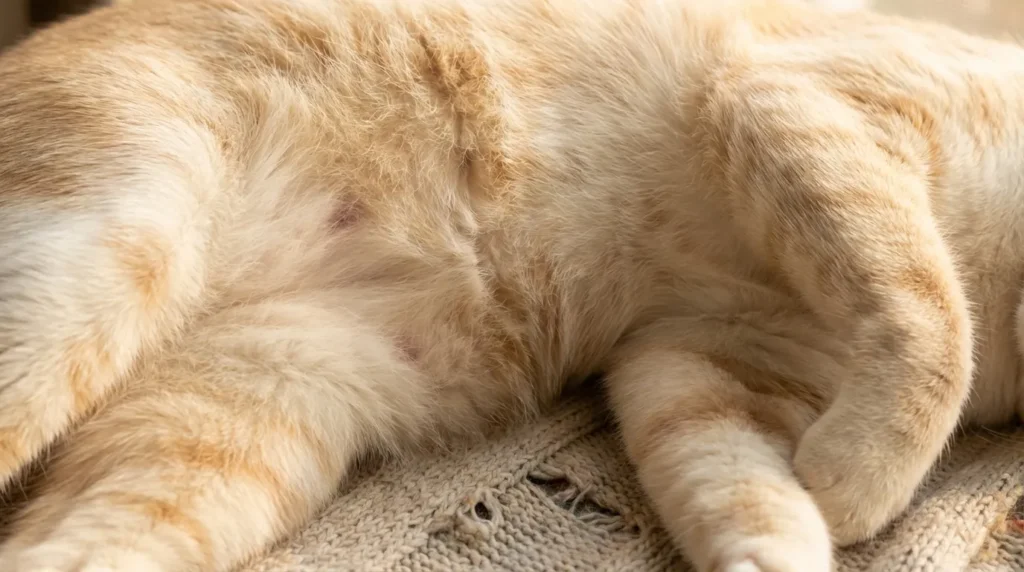
Gas in cats comes from two main sources: swallowed air and intestinal fermentation. Most causes are diet-related, but health conditions can play a role too.
Diet is the most common cause. Low-quality kibble loaded with fillers — corn, soy, wheat, and other fermentable carbohydrates — gives gut bacteria more material to ferment. That fermentation produces gas. The more filler in the food, the more gas it tends to generate.
Eating too fast causes a cat to swallow air with each bite. That swallowed air — a condition called aerophagia — travels through the digestive tract and exits as gas. Cats that gulp their food are more prone to this.
Food intolerances are a significant but underdiagnosed cause. Many cats are lactose intolerant, meaning their gut lacks enough lactase enzyme to break down dairy. If you’ve ever given your cat milk or cheese, that may be the culprit — can cats drink milk? breaks down exactly why most adult cats can’t handle dairy. Some cats also react to specific proteins like chicken or beef.
Hairballs slow gut motility. When hair accumulates in the stomach or intestines, it disrupts normal digestive movement. That slowdown gives bacteria more time to ferment food, which increases gas production.
Intestinal parasites — including roundworms, tapeworms, and Giardia — irritate the intestinal lining and disrupt normal bacterial balance. Giardia in particular causes significant gas, bloating, and loose stool.
Dysbiosis, an imbalance of gut bacteria, is another cause that rarely gets mentioned. When the ratio of beneficial to harmful bacteria shifts — from stress, antibiotics, diet changes, or illness — fermentation becomes irregular. This produces more gas and often more odor.
Underlying GI conditions like inflammatory bowel disease (IBD), pancreatitis, and malabsorption syndrome cause chronic gas as a secondary symptom. If your cat keeps throwing up alongside frequent gas, that combination is worth taking seriously — why does my cat keep throwing up explains the most common causes and when it signals something bigger.
Normal vs. Abnormal Cat Gas
Normal cat flatulence is occasional, mild-smelling, and causes no visible discomfort. A healthy cat passing gas quietly a few times throughout the day is not a cause for concern.
Abnormal gas looks different. Watch for these signs:
- Farting multiple times per hour
- Strong, sulfur-like odor that lingers
- Visible bloating or a distended abdomen
- Your cat pressing their belly to the floor or hunching
- Vocalizing when you touch their stomach
- Gas accompanied by vomiting or diarrhea
- Sudden change in litter box habits
Frequency matters. Occasional gas is normal. Frequent, smelly, uncomfortable gas is a symptom.
Not sure if what you’re seeing is gas or something else? The pet symptom checker can help you identify what’s going on before calling the vet.
Foods That Make Cats More Gassy
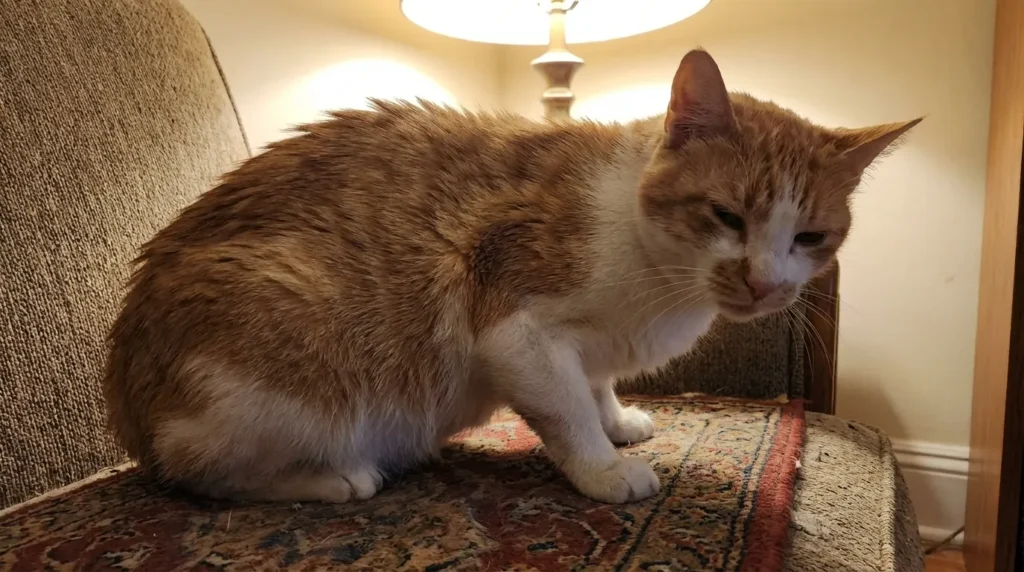
Certain ingredients consistently trigger gas in cats. If your cat has a flatulence problem, start by looking at what they’re eating.
High-fiber fillers like corn, soy, and wheat are the main offenders in cheap dry food. These ingredients ferment in the large intestine and produce significant gas. They also offer cats very little nutritional value.
Dairy products cause gas in most adult cats. Kittens produce lactase to digest their mother’s milk, but production drops sharply after weaning. By adulthood, most cats cannot properly digest dairy. This applies to cheese too — can cats eat cheese? covers exactly what happens when cats consume it.
Fermentable fiber additives like fructooligosaccharides (FOS) are added to some premium foods as prebiotics. In small amounts they support gut bacteria. In larger amounts, they feed gas-producing bacteria and backfire.
Spoiled food or table scraps introduce unfamiliar bacteria and compounds the cat’s digestive system isn’t built to handle. Even small amounts of the wrong food can trigger a gas flare.
Sudden diet changes disrupt gut flora. Switching foods too quickly — without a 7–10 day gradual transition — causes temporary digestive upset including gas, loose stools, and vomiting. If you’re looking for better food options, how much wet food to feed your cat gives practical guidance on portions and food quality.
Some owners wonder whether certain safe foods might help with digestion. Can cats eat pumpkin? is worth reading — pumpkin is one of the few fiber sources that tends to support digestion rather than disrupt it.
How to Reduce Cat Flatulence
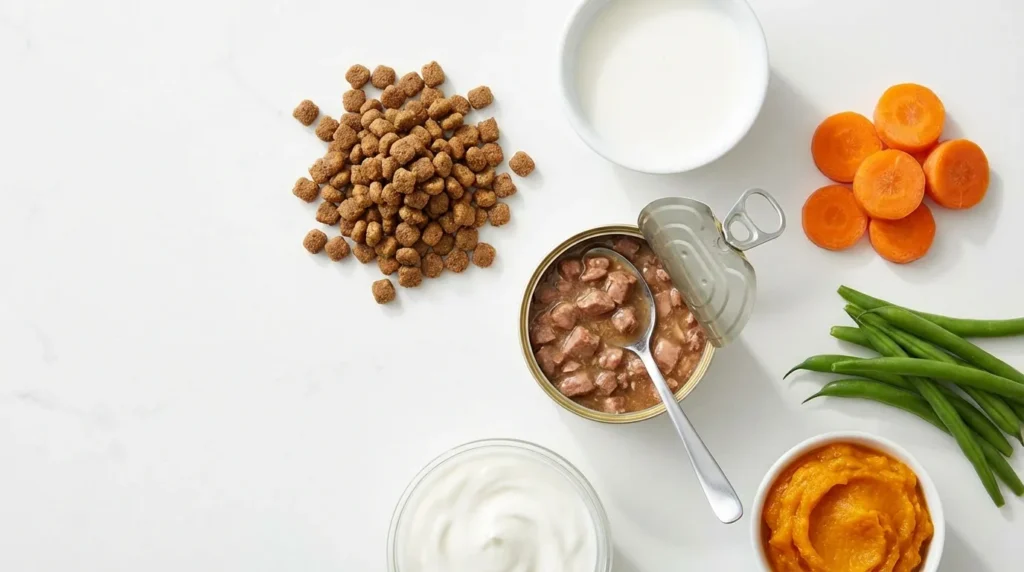
Most gas problems in cats respond well to diet and feeding adjustments. Start with the simplest changes before moving to supplements or vet intervention.
Switch to a higher-quality food. Look for a cat food where a named protein — chicken, salmon, turkey — is the first ingredient. Minimize corn, soy, wheat, and unnamed meat by-products. Wet food generally causes less gas than dry food because it contains fewer fermentable carbohydrates. For high-protein options that support digestion, 5 high-protein cat recipes for active cats offers ideas you can make at home.
Use a slow feeder bowl. If your cat eats fast, a puzzle feeder or slow feeder bowl reduces the amount of air swallowed per meal. This alone can noticeably reduce gas in fast eaters.
Transition foods gradually. When switching foods, mix 25% new food with 75% old for 2–3 days. Increase the new food proportion slowly over 7–10 days. This gives gut bacteria time to adjust.
Add a probiotic. Veterinary-grade probiotics containing Lactobacillus acidophilus or Enterococcus faecium help restore bacterial balance in the gut. They’re especially useful after antibiotic treatment or a stressful event that disrupted the microbiome.
Eliminate dairy. If your cat gets any milk, cheese, or cream as a treat, cut it out entirely for two weeks and see if gas improves.
Deworm regularly. Keep parasite prevention current. If your cat goes outdoors or hunts, ask your vet about an appropriate deworming schedule.
When to Call the Vet
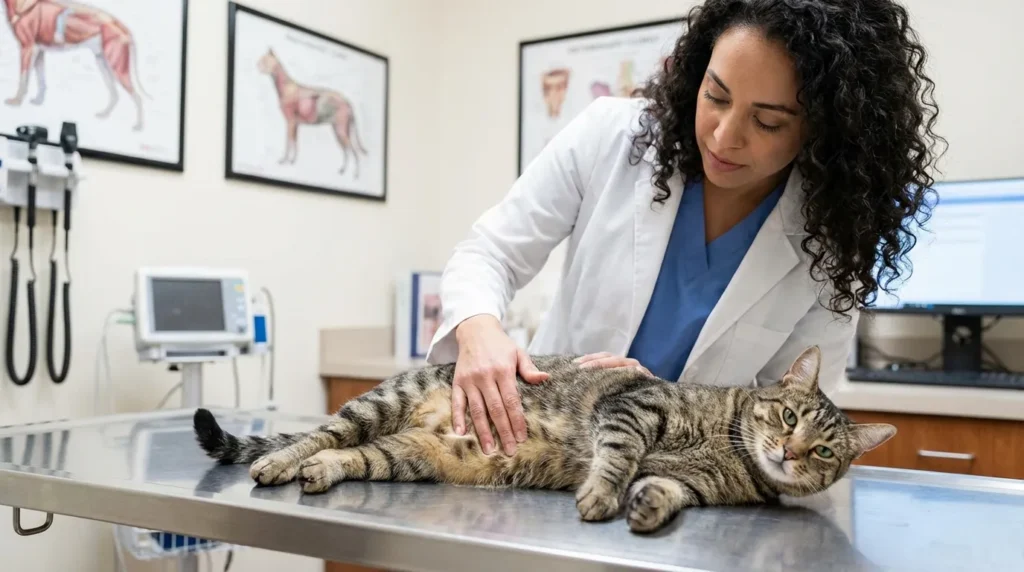
Most cat gas doesn’t need a vet visit. But some situations do.
Call your vet if your cat shows any of the following:
- Persistent gas lasting more than 2–3 days with no dietary explanation
- Visibly bloated or hard abdomen — this can indicate serious obstruction or fluid
- Weight loss alongside digestive symptoms
- Blood in stool or vomit
- Lethargy combined with gas and appetite loss
- Diarrhea lasting more than 24 hours
- Suspected parasite exposure — especially after traveling, boarding, or contact with new animals
Your vet may recommend a fecal test to rule out parasites, bloodwork to check for pancreatic or liver involvement, or an elimination diet trial to identify food intolerances. IBD diagnosis typically requires an ultrasound or intestinal biopsy.
If your cat is also drooling, that combination alongside gas and vomiting needs prompt attention — why is my cat drooling? covers the range of causes from mild to serious.
Don’t delay if your cat seems to be in pain. Abdominal discomfort in cats can escalate quickly.
Frequently Asked Questions
Do cats fart silently? Most of the time, yes. Cat flatulence is almost always silent. The anatomy of a cat’s digestive tract and the typically small volume of gas passed means you’ll rarely hear anything. You’re more likely to smell it than hear it.
Do certain cat breeds fart more? No breed is clinically proven to be significantly gassier than others. That said, cats with flat faces — brachycephalic breeds like Persians and Himalayans — tend to swallow more air while eating due to their compressed facial structure. Persian cats also tend toward sensitive digestion; Persian cat health problems covers the full picture of what this breed is prone to.
Can stress cause cat gas? Yes. Stress triggers changes in gut motility and bacterial balance. Cats that are anxious, recently moved, or adjusting to a new animal in the home may experience temporary digestive upset including increased gas. If you’re introducing a new pet to the household, how to introduce a cat to a dog can help minimize the stress that disrupts digestion.
Is cat gas a sign of worms? It can be. Intestinal parasites like roundworms and Giardia disrupt gut bacteria and cause gas, bloating, and diarrhea. If gas is accompanied by weight loss, a pot-bellied appearance, or visible worm segments in the stool, see a vet promptly.
Can cats fart on purpose? No. Flatulence is an involuntary reflex controlled by smooth muscle in the digestive tract. Cats have no voluntary control over it.
Why does my cat’s gas smell so bad? Strong odor usually means high-protein fermentation in the gut, a food intolerance, or a bacterial imbalance. Sulfur-smelling gas in particular points to protein putrefaction — often linked to low-quality food or an ingredient the cat can’t properly digest.
The Bottom Line
Cat flatulence is normal in small amounts. A healthy cat passes gas occasionally — usually silently, usually without odor strong enough to notice. Diet is the biggest driver. Low-quality food, dairy, fast eating, and sudden food changes are the most common triggers.
Frequent gas, visible bloating, or gas paired with vomiting, diarrhea, or weight loss needs a vet’s attention. Those combinations point to something beyond a simple diet issue.
Start with food quality and feeding habits. In most cases, that’s where the answer is. And if you’re ever unsure whether a symptom is normal or not, the pet symptom checker is a quick way to assess what your cat might be dealing with.