

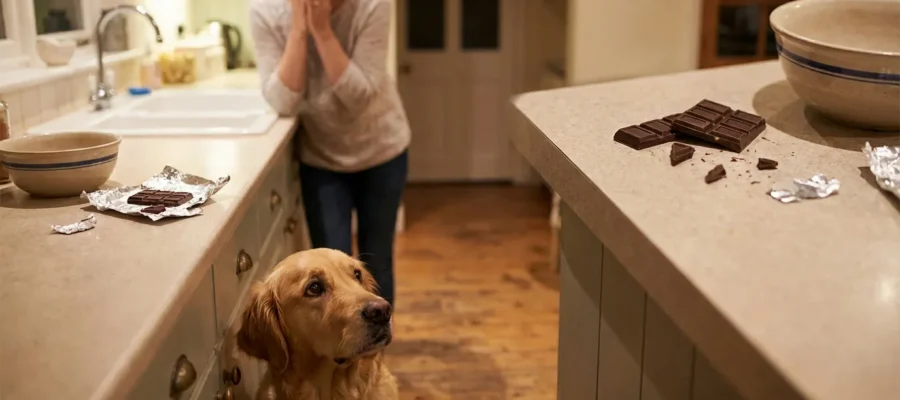
Yes, chocolate is toxic to dogs. It’s not a myth, and it’s not overstated. Chocolate contains two compounds — theobromine and caffeine — that dogs cannot process the way humans do. The result ranges from stomach upset to seizures to death, depending on how much they ate and what kind. If your dog just ate chocolate, don’t wait to see how it goes. Scroll to the What to Do section and act now. If you’re reading this before anything happens, good. What you learn here could save your dog’s life. You can also use our Pet Symptom Checker to quickly assess what your dog may be experiencing.
Why Chocolate Is Toxic to Dogs
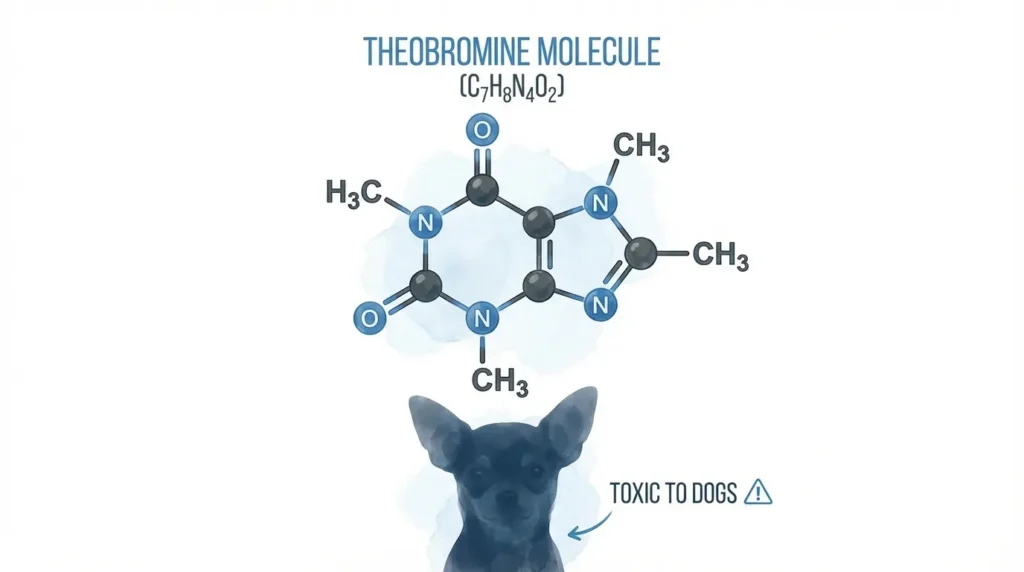
Chocolate contains a compound called theobromine. It also contains caffeine. Both belong to a chemical class called methylxanthines, and both are dangerous to dogs.
In humans, theobromine breaks down and clears the body within a few hours. In dogs, it doesn’t work that way. The half-life of theobromine in dogs is approximately 17.5 hours. That means it takes nearly 18 hours for a dog’s body to eliminate just half of the theobromine it absorbed. The compound builds up, keeps stimulating the nervous system and heart, and causes damage long after the chocolate was eaten.
Theobromine works by blocking adenosine receptors in the brain and inhibiting phosphodiesterase enzymes. In plain terms: it overstimulates the heart, the central nervous system, and the kidneys. The dog’s heart races. Muscles twitch. The kidneys push out more fluid. The gut cramps up.
Caffeine compounds the problem. It hits the same receptors and adds cardiovascular and neurological stress on top of what theobromine is already doing.
The toxicity isn’t a quirk. It’s straightforward pharmacology. Dogs metabolize these compounds too slowly to handle them safely at any meaningful dose. For a broader look at what foods dogs can and can’t eat, our Pet Food Safety Checker covers hundreds of ingredients in seconds.
Which Types of Chocolate Are Most Dangerous?
Not all chocolate carries the same risk. The darker and more concentrated the chocolate, the more theobromine it contains per ounce.
| Chocolate Type | Theobromine (approx. mg/oz) | Risk Level |
|---|---|---|
| Cocoa powder (dry) | 400–737 mg/oz | Extremely High |
| Unsweetened baking chocolate | 390–450 mg/oz | Extremely High |
| Dark chocolate (70–85%) | 150–160 mg/oz | High |
| Semisweet/chocolate chips | 138–150 mg/oz | High |
| Milk chocolate | 44–58 mg/oz | Moderate |
| White chocolate | ~0.25 mg/oz | Very Low |
Cocoa powder and baking chocolate are the most dangerous by a significant margin. A small amount of either can push a medium-sized dog into serious toxicity.
White chocolate contains almost no theobromine. It’s still not a safe treat — the fat and sugar cause other problems — but the theobromine risk is negligible.
Chocolate-containing foods deserve the same scrutiny as straight chocolate. Brownies, chocolate cake, cocoa-dusted nuts, hot cocoa mix, chocolate trail mix, and mocha-flavored products all carry real theobromine loads. Don’t dismiss them because they’re “just a bite of brownie.” Similarly, other everyday foods can carry hidden risks — check out whether dogs can eat mushrooms or whether cherries are safe for dogs if you’re doing a wider audit of your dog’s diet.
How Much Chocolate Is Too Much?
Toxicity is dose-dependent. The danger comes from the ratio of theobromine consumed to the dog’s body weight — measured in milligrams per kilogram (mg/kg).
General thresholds:
- 20 mg/kg — Mild to moderate symptoms begin (vomiting, diarrhea, restlessness)
- 40–50 mg/kg — Severe symptoms (muscle tremors, elevated heart rate, seizures possible)
- 60 mg/kg and above — Potentially fatal
Here’s what that looks like in practice:
A 10 lb (4.5 kg) dog reaches the 20 mg/kg threshold after eating roughly 1 oz of dark chocolate or just 0.4 oz of baking chocolate. That’s a few chocolate chips or a small square from a baking bar.
A 70 lb (32 kg) dog can tolerate more before hitting that threshold — but dark chocolate or baking chocolate still gets dangerous fast. Two to three ounces of dark chocolate could push a dog this size into the mild-to-moderate range.
Milk chocolate requires a larger amount to reach toxic levels, but it’s not safe in quantity. A 10 lb dog would show mild symptoms after eating around 3.5 oz of milk chocolate — about one standard candy bar.
Body weight matters enormously. Smaller dogs are at higher risk from the same amount of chocolate. If you’re not sure how old your dog is or want to better understand their life stage and size context, our Pet Age Calculator can help. A Chihuahua and a German Shepherd eating the same piece of dark chocolate are not in the same situation.
If you need a fast calculation, the ASPCA Animal Poison Control Center and Pet Poison Helpline both have online calculators and live phone support.

Symptoms of Chocolate Poisoning in Dogs
Symptoms typically appear within 6 to 12 hours of ingestion. In some cases, especially with large amounts, signs start within 1 to 2 hours.
Mild to Moderate Symptoms
- Vomiting
- Diarrhea
- Increased thirst and urination
- Restlessness and pacing
- Hyperactivity
- Bloated or uncomfortable abdomen
Severe Symptoms
- Muscle tremors or stiffness
- Rapid or irregular heartbeat (tachycardia, arrhythmia)
- High blood pressure
- Elevated body temperature
- Seizures
- Collapse
Because theobromine stays in the body for up to 72 hours, symptoms can persist or worsen over several days without treatment. A dog that seems “okay” at first can deteriorate significantly within 12 to 24 hours.
If your dog is vomiting, that’s a symptom worth tracking carefully — our guide on why dogs vomit and what to do about it walks through what different types of vomiting signal. Older dogs and dogs with existing heart conditions are more vulnerable to the cardiac effects. Even mild symptoms shouldn’t be dismissed in those cases. Unexplained shaking is another sign to take seriously — see why your dog may be shaking for more context.

What to Do If Your Dog Eats Chocolate
Act quickly. Don’t take a wait-and-see approach.
Step 1: Gather the facts. Before you call anyone, collect the following:
- What type of chocolate did the dog eat?
- How much (approximate weight or number of pieces)?
- When did the dog eat it?
- How much does your dog weigh?
- Is the dog showing any symptoms yet?
This information determines urgency. Have it ready before you call.
Step 2: Call immediately.
ASPCA Animal Poison Control Center: 888-426-4435 (available 24/7 — consultation fee may apply)
Pet Poison Helpline: 855-764-7661 (available 24/7 — consultation fee may apply)
Your regular vet or an emergency animal hospital works too. A professional can assess whether the amount ingested is dangerous for your dog’s size and advise next steps.
Step 3: Do not induce vomiting without guidance. Inducing vomiting can help if done within 1 to 2 hours of ingestion, but it’s not always appropriate. A dog that’s already showing neurological symptoms — tremors, confusion, seizures — should not have vomiting induced. If a vet does advise it, read our guide on how to make a dog throw up safely before attempting anything at home — it explains exactly what’s safe and what isn’t.
Step 4: Follow professional instructions precisely. If a vet says bring the dog in, don’t delay. If they say monitor at home, they’ll tell you what signs require an emergency visit. Take notes.
How Vets Treat Chocolate Toxicity
Treatment depends on how much was eaten, when it was eaten, and what symptoms are present.
If a dog arrives within 1 to 2 hours of eating a significant amount, the vet may induce vomiting using apomorphine or another emetic. This removes theobromine from the gut before more is absorbed.
Activated charcoal is sometimes given after vomiting. It binds remaining theobromine in the digestive tract and slows further absorption. Because of theobromine’s long half-life, multiple doses of activated charcoal over several hours may be used.
For dogs showing cardiac symptoms, intravenous fluids and heart-regulating medications help stabilize heart rate and blood pressure. Seizures are managed with anticonvulsants.
There is no antidote for theobromine poisoning. Treatment is supportive — the goal is to eliminate as much of the compound as possible, manage symptoms, and keep the dog stable until their body clears it.
Hospitalization is common for moderate to severe cases and may last 12 to 72 hours.

Dogs Most at Risk
Any dog can be harmed by chocolate. But some are more vulnerable than others.
Small breeds reach toxic thresholds faster than large breeds from the same amount. A Yorkie, Chihuahua, or Maltese eating a few chocolate chips is in a different situation than a Labrador eating the same amount. If you have a small breed, our guide to small dog breeds that barely shed also covers some general care considerations worth knowing.
Puppies have less developed metabolic systems. They’re also more likely to eat something they find on the ground without any hesitation.
Senior dogs and dogs with heart disease are especially vulnerable to theobromine’s cardiac effects. Dogs with dilated cardiomyopathy face compounded risk — our DCM in dogs guide explains that condition in detail. Even a dose that causes only mild symptoms in a healthy adult dog can trigger arrhythmias in a dog with an existing heart condition.
Dogs that ate chocolate on an empty stomach absorb theobromine faster. The absence of other food in the gut accelerates uptake.
How to Keep Chocolate Away From Your Dog
Prevention is simple in principle and easy to slip up on in practice.
- Store all chocolate in closed cabinets or high shelves, not on counters.
- Treat chocolate-containing foods — baked goods, trail mix, protein bars, cocoa powder — with the same caution as plain chocolate.
- During holidays (Halloween, Christmas, Easter, Valentine’s Day), be especially vigilant. These are the highest-risk periods for accidental ingestion.
- Tell guests not to feed your dog table scraps or “treats” without checking with you first.
- Train a reliable “leave it” command. Our dog training guide covers this and other essential commands step by step.
- Keep the ASPCA and Pet Poison Helpline numbers saved in your phone now, before you need them.
- If you’re ever unsure whether a specific ingredient is safe, run it through our Pet Food Safety Checker before letting your dog near it.
Frequently Asked Questions
Can a small amount of chocolate kill a dog? A small amount is unlikely to be fatal for a large dog, but it absolutely can cause serious harm or death in a small dog. The type of chocolate matters too. Even a small piece of baking chocolate or cocoa powder can push a small dog past dangerous thresholds.
How long after eating chocolate will a dog get sick? Most dogs show symptoms within 6 to 12 hours. Some show signs within 1 to 2 hours, especially after eating a large amount. Symptoms can persist for up to 72 hours because of theobromine’s slow elimination.
Is white chocolate toxic to dogs? White chocolate contains almost no theobromine — roughly 0.25 mg per ounce — so theobromine toxicity isn’t a realistic concern. However, the high fat content can cause pancreatitis, and the sugar isn’t good for dogs either. It’s still not a safe treat.
My dog ate one chocolate chip. Should I be worried? One chocolate chip is unlikely to cause serious harm in a medium or large dog. In a very small dog, it’s worth calling poison control just to confirm. When in doubt, make the call — it takes two minutes.
What if my dog seems fine after eating chocolate? Don’t assume safety because symptoms haven’t appeared yet. Theobromine takes time to build up and take effect. A dog can appear normal for several hours and then deteriorate. Contact a vet or poison control regardless of how your dog looks right now. You can also run your dog’s symptoms through our Pet Symptom Checker for a fast initial read.
What other foods are toxic or risky for dogs? Beyond chocolate, several common foods carry real risk. Avocado, cherries, and raw chicken are all worth understanding before they become an emergency. Our guide on what vegetables dogs can eat and what fruits are safe for dogs are good starting points for building a safer diet.
Final Word
Chocolate is one of the most common causes of dog poisoning in the United States. It’s in almost every home, it smells appealing to dogs, and it shows up in dozens of forms beyond a simple candy bar. The danger is real, it’s dose-dependent, and it’s preventable.
If your dog ate chocolate, call a vet or poison control now — don’t search for reassurance online first. If they’re fine and you’re reading this ahead of time, store your chocolate out of reach and save those hotline numbers. Avoiding common mistakes as a dog owner is part of keeping them safe long-term — our piece on common dog owner mistakes is worth a read if you want to go further. That two-minute phone call could be the most important one you ever make for your dog.