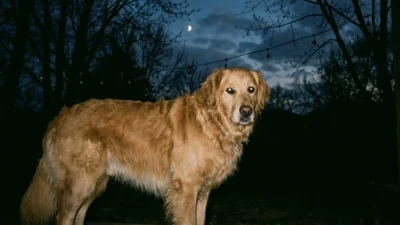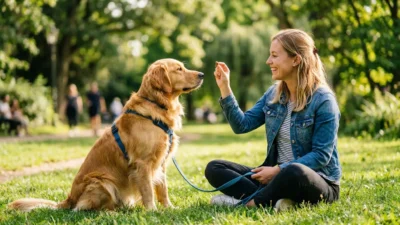

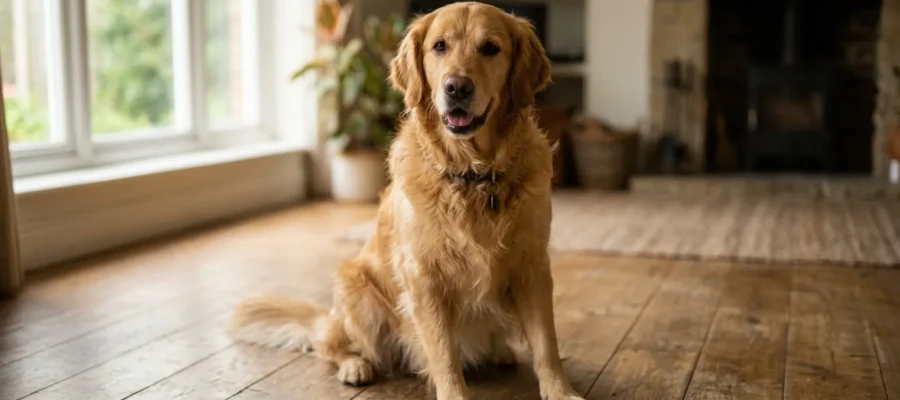
Your dog has been watching you for the last ten minutes. You haven’t moved. Neither have they. Just two eyes locked on yours like you’re the most interesting thing on the planet.
It’s flattering. Sometimes it’s a little unsettling. And if you’ve ever caught yourself wondering what’s actually going on behind those eyes — you’re not alone. Dog staring is one of the most common questions owners ask, and the answer isn’t one-size-fits-all.
Here’s everything you need to know.
The Quick Answer
Dogs stare at their owners for 7 main reasons: they want something, they’re waiting for a cue, they’re showing affection, they’re trying to communicate, they’re anxious, they’re issuing a warning, or they’re simply reading your emotional state. Most staring is harmless and even a sign of a strong bond. A hard, unblinking stare paired with a stiff body is the one exception — that can signal a threat.
1. Your Dog Wants Something
This is the most common reason, and it’s exactly what it looks like.
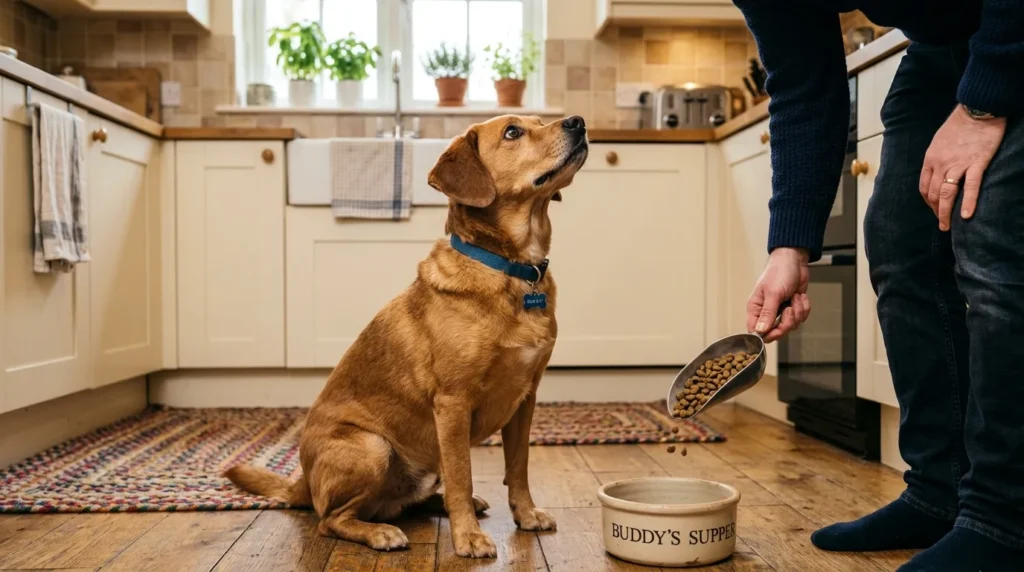
Dogs figure out very quickly that making eye contact gets results. You look up, you respond. They learn this pattern fast. So when dinner is late, or the water bowl is empty, or they need to go outside — staring at you is their most reliable tool.
It’s not random. Dogs time it. If your dog stares at you around the same time every evening, it’s almost certainly mealtime-related. If they’re staring while sitting near the door, they need a bathroom break. If they’re staring while you’re eating, they want your food.
Watch what comes right before and after the stare. That context usually tells you exactly what they’re after.
2. Your Dog Is Watching for Cues
Dogs pay more attention to human behavior than almost any other animal on earth. They track your movements, your routines, your patterns. Research consistently shows that dogs follow human pointing gestures, read facial expressions, and pick up on subtle shifts in body language that most people don’t even realize they’re making.
When your dog stares at you, they may literally be waiting for a signal. You pick up the leash — that means walk. You put on your shoes — that might mean you’re leaving. You open the treat drawer — that definitely means something good.
Dogs trained with positive reinforcement are especially attentive. They’ve learned that watching you closely pays off. Understanding how to train your dog with simple steps shows you how to use that natural focus to build real skills. A stare in these cases isn’t neediness. It’s focus.
3. Your Dog Loves You — The Oxytocin Science
In 2015, a research team led by Takefumi Kikusui at Azabu University in Japan published a study in the journal Science that surprised a lot of people. When dogs and their owners gazed into each other’s eyes, both experienced a measurable rise in oxytocin — the same hormone associated with maternal bonding between mothers and infants.
Dogs that gazed longer at their owners showed a 130% increase in oxytocin levels. Owners showed a 300% increase.
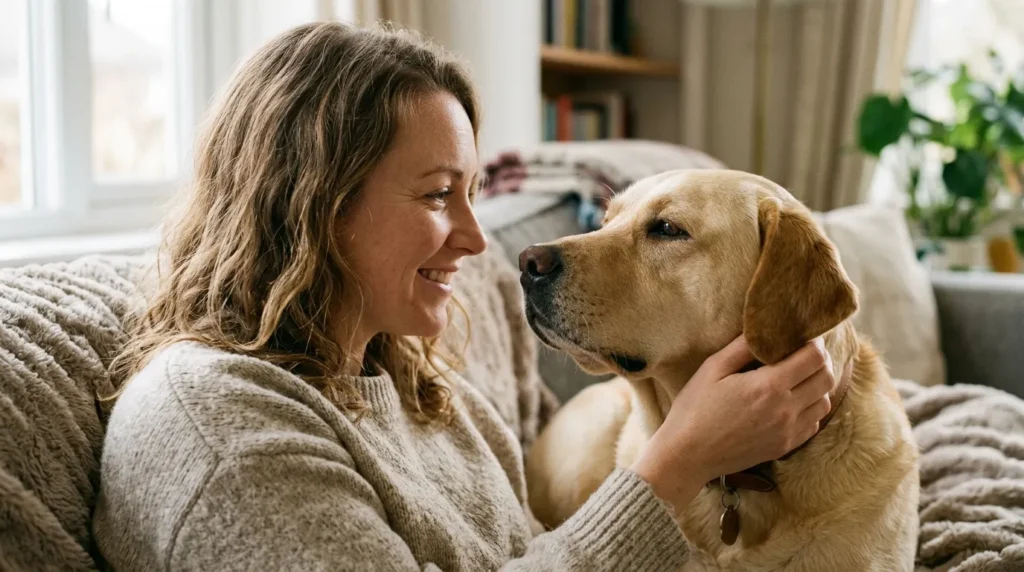
This is not a metaphor. Mutual eye contact between you and your dog is a biological bonding mechanism. It produces a real hormonal response in both of you.
So when your dog stares at you with soft eyes and a relaxed body — no tension, tail moving loosely — there’s a good chance they’re not trying to tell you anything. They just love being near you and looking at you. That stare is the canine equivalent of a hug.
Staring isn’t the only way dogs express affection. If your dog also follows you from room to room, read why does my dog follow me everywhere — it’s driven by the same bonding instinct.
4. Your Dog Is Trying to Tell You Something
Dogs don’t have words. What they have is eye contact, body posture, tail movement, and ear position. Staring is often the opener — the way they start a sentence before adding the rest.
Watch what your dog does after the stare. If they walk toward the door after making eye contact, they need to go out. If they do a play bow (front legs stretched low, rear end up), they want to play. If they glance at their empty water bowl and then back at you, the message is clear.
This is intentional communication. Dogs that do this regularly have learned that you respond to it. They’re not confused about cause and effect — they’ve figured out that staring at you starts a conversation.
Dogs use a whole range of behaviors to communicate. Why do dogs wag their tails breaks down another major signal most owners misread. The more you pay attention to what follows the stare, the better you’ll get at reading exactly what they’re asking for.
5. Your Dog Is Anxious
Not all staring comes from a good place. Some dogs stare out of stress.
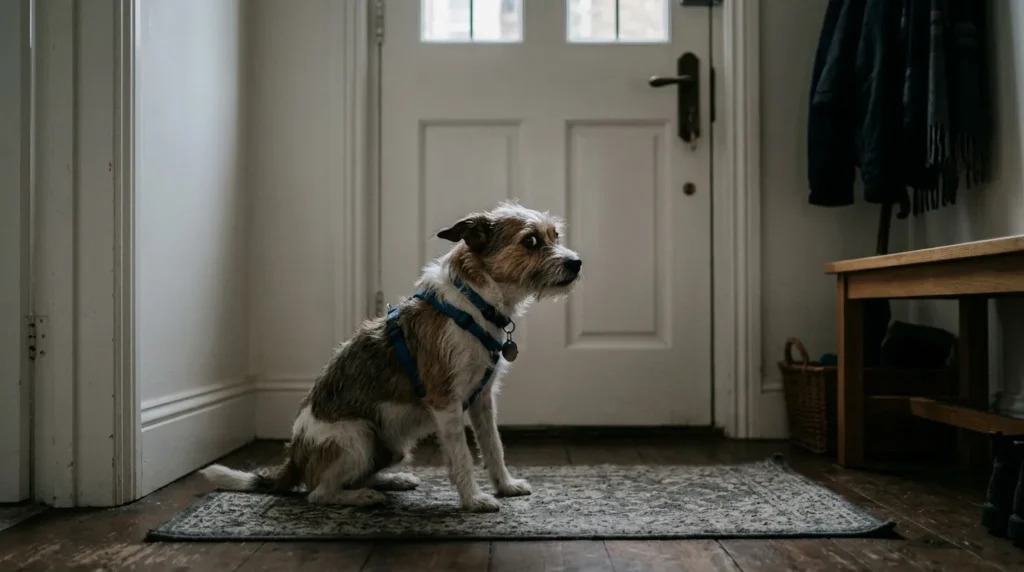
Dogs with separation anxiety often track their owners constantly. Every time you shift in your seat, stand up, or reach for your jacket, they’re watching — because they’re trying to predict whether you’re about to leave. The stare in these cases is vigilant, not relaxed. You may notice it paired with other anxiety signals: pacing, whining, following you from room to room, or an inability to settle.
A few signs that staring may be anxiety-driven:
- Your dog can’t seem to relax unless they can see you
- The staring gets more intense right before you leave
- They seem distressed rather than calm while watching you
- The staring is accompanied by yawning, lip licking, or panting (common stress signals)
Anxiety-driven behavior shows up in other ways too. If your dog shakes frequently without a clear cause, why is my dog shaking covers the main physical and emotional triggers to check. If this sounds familiar, it’s worth talking to a veterinarian or a certified animal behaviorist. Separation anxiety is treatable, and the earlier you address it, the easier it is to manage.
6. It’s a Warning — Understanding the Hard Stare
This is the one type of staring that should stop you in your tracks.
A hard stare is direct, sustained, and unblinking. It’s not soft or curious — it’s intense and deliberate. The dog’s body will usually be rigid. Muscles tense. Weight shifted slightly forward. Tail stiff, held low or straight out. Ears forward or pinned back.
This is a threat signal. It’s the dog’s way of saying: back off, or this escalates.
You most often see it in specific situations — when a dog is near a high-value item like food or a bone, when a stranger approaches too quickly, or when a dog feels cornered. It’s called resource guarding when it’s tied to an object, and it’s a well-documented behavior in canine behavioral science.
What you should do: Don’t hold eye contact. Don’t move toward the dog. Slowly turn your body sideways, avoid direct gaze, and give the dog space. This signals that you’re not a threat.
This same warning pattern appears in other behaviors. If your dog also bites or nips, why does my dog bite me explains the behavioral root causes and what to do about them.
If you see a hard stare in your own dog regularly — especially around food, toys, or furniture — consult a professional trainer or a board-certified veterinary behaviorist (DACVB). Resource guarding can escalate, and it responds well to structured behavior modification when caught early.
7. Your Dog Is Just Reading You
Dogs are emotional readers. They notice when you’re upset before you’ve said a word. Studies have shown that dogs can distinguish between happy and angry human faces. They respond differently to calm owners versus tense ones. Some actively try to provide comfort when you appear distressed.
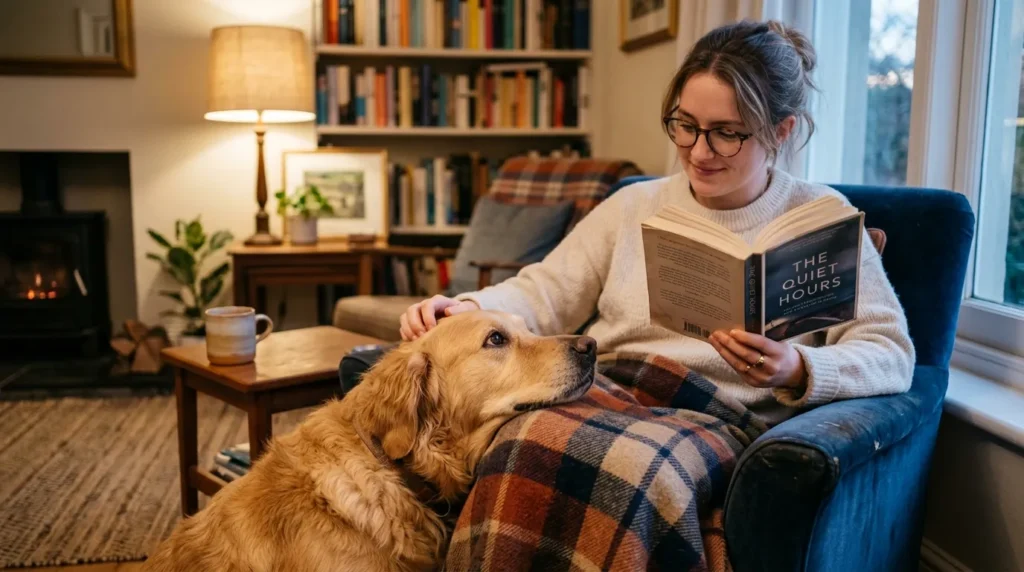
When your dog stares at you in quiet moments — while you’re working, reading, or just sitting still — they may simply be monitoring you. Checking in. Making sure you’re okay. Gathering information about your current emotional state so they know how to behave around you.
This kind of staring is relaxed and unhurried. The dog isn’t asking for anything. They’re just present with you. For many dogs, that’s a big part of what they do.
Dogs express this attunement in other ways too. If you’ve noticed your dog licking you constantly, that’s another affection and bonding behavior driven by the same deep attachment.
Hard Stare vs. Soft Stare — How to Tell the Difference
This distinction matters, so here it is clearly:
Soft Stare (Safe):
- Eyes relaxed, slightly squinted
- Body loose and relaxed
- Tail wagging gently or hanging naturally
- Ears in neutral position
- Mouth relaxed, possibly slightly open
- Often comes with leaning in or tail wag
Hard Stare (Warning):
- Eyes wide open, unblinking, fixed
- Body rigid and tense
- Tail stiff, held straight or low
- Ears pushed forward or pulled flat
- Mouth closed and tight
- May include a low growl or stillness before movement
If you’re unsure which you’re looking at, default to caution. Look away, turn slightly sideways, give the dog space. If it was a soft stare, the dog will relax or approach you. If it was a hard stare, the dog will usually de-escalate when you remove the perceived pressure.
How to Read Why Your Dog Is Staring Right Now
Use this as a quick field guide:
Time of day matters. Is it close to their normal mealtime? Almost certainly food-related.
Location matters. Near the door? Needs to go out. Near their leash? Wants a walk. By the treat jar? You already know.
What happened right before? Did you pick up something that belongs to them? Did you make a sound that might mean something to them? Did you stop paying attention mid-play?
What does their body look like? Loose and relaxed — affection or communication. Stiff and tense — warning. Squirmy and bouncy — wants to play.
How long has the stare lasted? A long, calm, unbroken stare with a relaxed body is usually love or attentiveness. Short stares that keep repeating — usually a need they’re trying to communicate.
Should You Stare Back at Your Dog?
With a dog you know well and have a good relationship with, mutual eye contact is healthy and bonding. The Nagasawa 2015 study showed it actively increases oxytocin in both species. Holding a relaxed, soft gaze with your own dog strengthens your connection.
However, staring directly into the eyes of an unfamiliar dog is a different matter. In canine communication, a direct, sustained stare is a challenge. Strange dogs — especially those already showing tension — can interpret it as threatening.
The rule: soft gaze with your own dog is fine and beneficial. Hard, prolonged eye contact with a dog you don’t know is not recommended.
You can also train your dog to make eye contact on cue using a phrase like “watch me.” This pairs naturally with broader training — if you’re working on obedience basics, how to crate train your dog and how to stop dog barking are two foundational skills that build on the same focused attention.
How to Respond to Each Type of Stare
If your dog stares because they want something: Decide if the need is legitimate — potty, water, food time. If yes, respond. If it’s begging at the table, do not reward it. If you feed them from your plate once, the staring behavior is reinforced immediately.
If your dog stares for attention during training: Use it. That focus is valuable. Put eye contact on cue and build from there. A solid training foundation makes a huge difference — how to train your dog with simple steps is a good starting point if you haven’t worked through the basics yet.
If your dog stares out of love: Hold a soft gaze back. Say something calm. Pet them. Let it be a moment between the two of you.
If your dog stares due to anxiety: Don’t reinforce the anxious behavior by giving excessive reassurance every time. Calmly acknowledge them, then redirect to a calm activity. Long-term, work with a professional on the underlying anxiety.
If you see a hard stare: Back off immediately. Remove the trigger if possible. Don’t stare back. Give the dog space and time to de-escalate.
When to Be Concerned About Dog Staring
Most staring is completely normal. But a few scenarios warrant a closer look:
- Sudden change in staring behavior in an older dog — this can sometimes indicate cognitive dysfunction syndrome, vision changes, or neurological issues. If your dog is also showing other unusual symptoms, the pet symptom checker can help you identify whether a vet visit is warranted.
- Staring at walls or into space with no apparent trigger — can be a sign of neurological problems or seizure activity
- Hard staring accompanied by growling or snapping, especially at family members — consult a veterinary behaviorist, not just a general trainer
- Constant anxious staring that’s getting worse over time — may indicate worsening separation anxiety or generalized anxiety disorder. If your dog is also panting heavily at rest, check why is my dog panting so much — chronic panting and constant vigilance often go together in anxious dogs.
- Staring paired with confusion, disorientation, or unusual behavior — warrants a veterinary exam to rule out medical causes
When in doubt, a conversation with your vet is always the right call.
Frequently Asked Questions
Why does my dog stare at me when I eat?
Your dog stares while you eat because they want your food. Dogs are opportunists by nature, and they’ve learned that sustained eye contact makes some owners feel guilty enough to share. If you’ve ever fed your dog from the table — even once — you reinforced the behavior. The fix is consistent: don’t feed them from your plate, and redirect them to a mat or bed during mealtimes. If you’re unsure which human foods are safe and which aren’t, the pet food safety checker is a quick way to verify before you share anything.
Why does my dog stare at me at night?
Nighttime staring usually comes down to one of three things. Your dog may need to go outside for a bathroom break. They may be unsettled by a sound or change in the environment. Or they may have anxiety that gets worse in low-stimulation environments like a quiet, dark room. If your dog also seems unsettled during storms or loud events, how to calm a dog during a storm covers practical techniques that help anxious dogs settle. If the nighttime staring is new, rule out a physical need first. If it keeps happening, look at whether anxiety or a routine change might be driving it.
Why does my dog stare at me while lying down?
A dog staring at you from a relaxed, lying-down position is almost always showing affection or staying connected. It’s a calm, passive behavior. They’re comfortable, they feel safe, and they want to keep you in their line of sight. This is one of the least concerning types of staring. Enjoy it.
Why does my dog stare at me without blinking?
An unblinking stare can mean two opposite things depending on context. In a relaxed dog with a soft expression and loose body, it’s deep focus or affection — they’re absorbed in watching you. In a tense dog with a stiff body, an unblinking stare is a warning. Always read the body alongside the eyes. The eyes alone don’t tell you enough.
Is it bad to stare back at your dog?
With your own dog, no — soft mutual eye contact is bonding and scientifically shown to release oxytocin in both of you. With a dog you don’t know, or a dog already showing tension, direct prolonged eye contact can be interpreted as a threat. Read the situation. If the dog looks relaxed, a gentle shared gaze is fine. If they look tense or unsure, look away and give them space.
Final Thoughts
Your dog stares at you because you matter to them — more than you probably realize. You’re their main source of food, safety, direction, and connection. Watching you is how they navigate the world.
Most of the time, that stare means something simple: they love you, they need something, or they’re just paying attention. Learning to read the signals — the body, the context, the timing — turns a confusing behavior into a conversation you can actually understand.
Staring is just one piece of the puzzle. If you want to go deeper on dog communication, why do dogs howl, why do dogs eat grass, and why do dogs chase their tails are three other behaviors that make a lot more sense once you understand the instincts behind them.