
Your cat tears through the house at 3 AM like a caffeinated cheetah. Mine does too. Commercial kibble just wasn’t cutting it for my cat’s energy needs. She’d eat, then crash an hour later.
I started making high-protein meals at home. The difference showed up in three days. More sustained energy. Better muscle tone. That glossy coat everyone asks about.
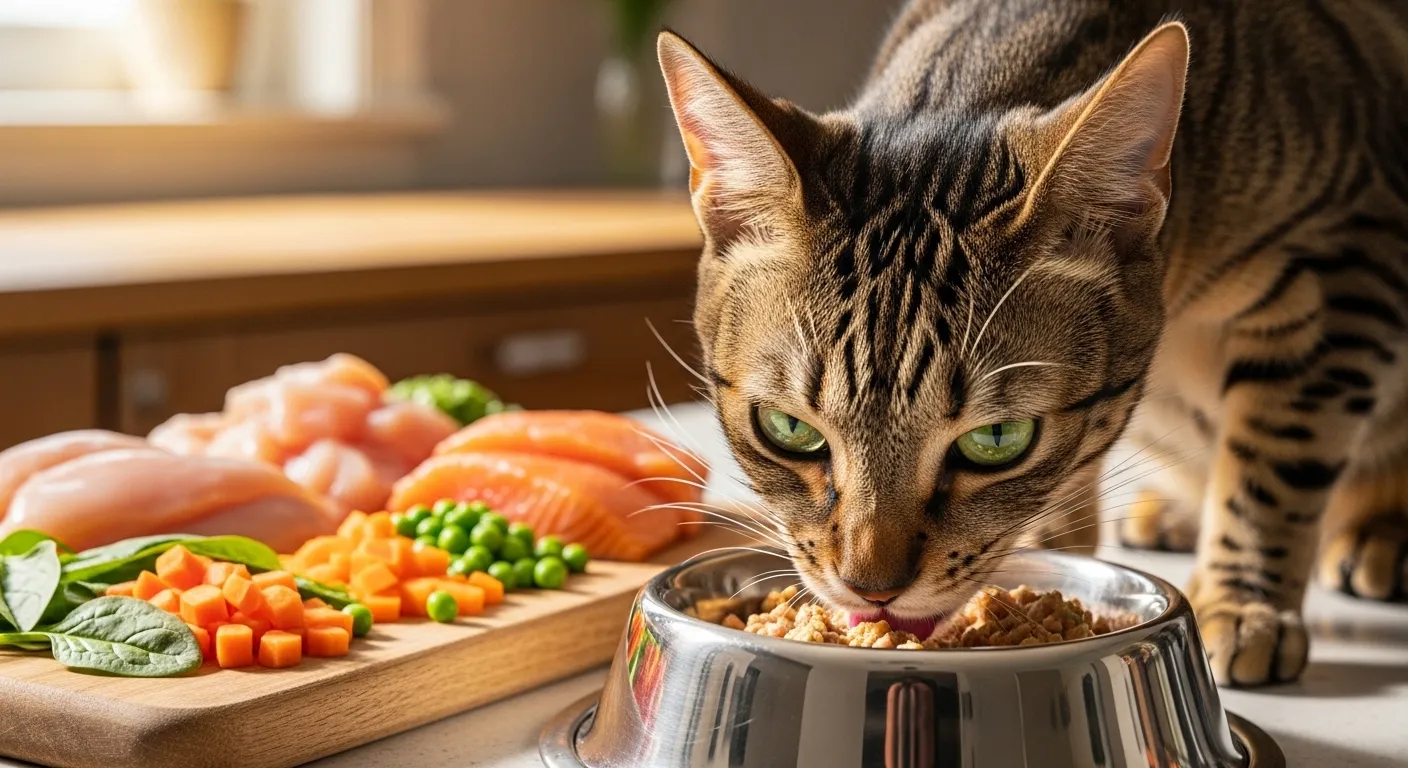
These five recipes changed everything. Each one takes under 30 minutes to prep. Each one delivers 40-50% protein. Each one costs less than premium canned food.
You get exact measurements. Step-by-step instructions. Storage guidelines. Safety protocols for raw and cooked options.
Active cats burn through calories fast. They need real meat. Dense nutrition. Not corn-based fillers dressed up as “complete nutrition.”
This guide covers chicken, turkey, beef, salmon, and sardine-based recipes. All include the supplements cats actually need. All tested on real cats who actually ate them.
Let’s fix your cat’s diet.
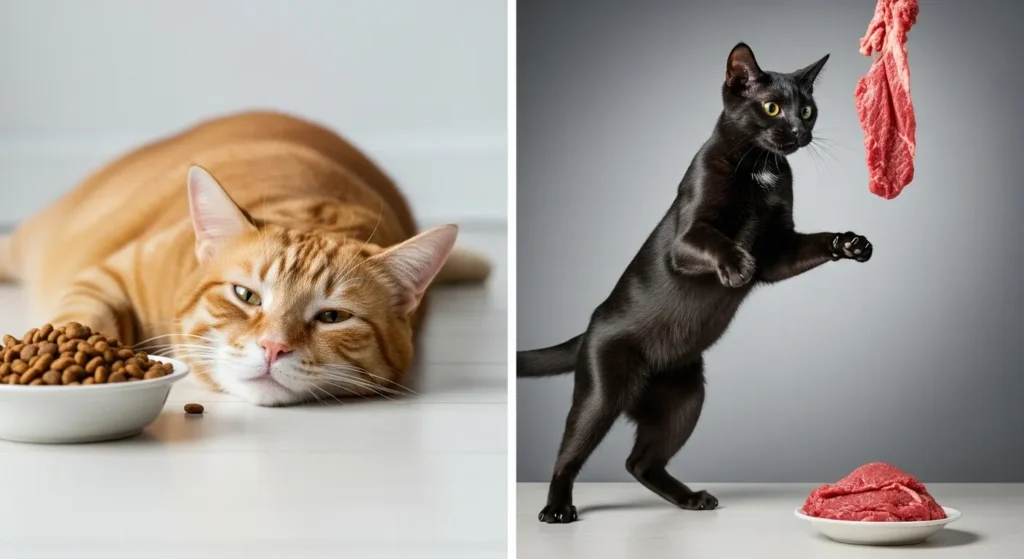
Why Active Cats Need High-Protein Homemade Food
Cats are obligate carnivores. Their bodies run on meat, not grains. An active cat racing around your house burns 20-30% more calories than a couch potato cat.
Commercial food often contains 8-12% protein on a dry matter basis. That’s barely adequate for a sedentary cat. Your parkour expert needs 35-50% protein minimum.
The Active Cat’s Nutritional Needs
Active cats need three things: protein for muscle repair, fat for sustained energy, and taurine for heart function.
A 10-pound active cat needs about 280-320 calories daily. But calorie count means nothing if the food is 60% corn filler. That cat is starving for actual nutrients while getting fat on empty calories.
Protein builds and repairs muscle tissue. Your cat’s constant jumping, climbing, and sprinting creates micro-tears in muscle fibers. Quality animal protein fixes that overnight.
Fat provides slow-burning fuel. Unlike simple carbs that spike and crash, fat keeps energy levels steady for hours. Active cats need 15-20% fat in their diet.
Taurine prevents heart disease and blindness. Cats can’t make it themselves. They must get it from meat. Processing destroys taurine, which is why commercial food adds it back synthetically.
Benefits Over Commercial Food
You know exactly what goes in. No mystery meat. No rendered by-products from slaughterhouse floors. No artificial preservatives.
Commercial cat food uses the cheapest protein sources that technically meet minimum standards. That often means meat that failed human food safety standards. The rendering process cooks it at high temps to kill bacteria, which also destroys nutrients.
Homemade food costs $2-3 per pound of finished product. Premium commercial food runs $8-12 per pound once you account for the 80% water content in canned food.
Your cat’s digestive system works better on fresh food. Less vomiting. Smaller, firmer stools. Better nutrient absorption. Commercial food creates large, soft, smelly poops because cats can’t digest half of it.
The coat quality difference is obvious. Dull, dry fur transforms into sleek, glossy shine within 3-4 weeks of switching to fresh food.
If you’re wondering how much wet food to feed your cat when transitioning to homemade meals, the guidelines below will help you calculate precise portions based on your cat’s weight and activity level.
Cost Comparison
Here’s real math. A 10-pound cat eats about 5-6 ounces of food daily.
Premium canned food: $3.50 per 5.5-ounce can = $3.50/day = $105/month
Homemade raw chicken recipe: $1.80/day = $54/month
You save $600 per year per cat. With multiple cats, the savings multiply fast.
Bulk buying reduces costs further. Chicken thighs run $1.99/lb on sale. Ground beef hits $3.99/lb. Organ meats often cost under $2/lb at ethnic grocery stores.
The supplement investment is real but small. A $30 bottle of calcium powder lasts 6 months. Fish oil runs $15/month for two cats.
For those also curious about budget-friendly options for commercial food, check out cheap homemade cat food ideas that complement these high-protein recipes.
Safety and Balance Requirements
Homemade cat food needs proper supplementation. Meat alone lacks calcium and several vitamins. A cat eating unsupplemented homemade food will develop severe health problems within months.
You must add calcium. The ratio of calcium to phosphorus matters critically. Meat contains lots of phosphorus, almost no calcium. The proper ratio is 1.2:1 calcium to phosphorus.
Taurine must be added to cooked recipes. Heat destroys it. Raw heart and dark meat contain taurine naturally, but cooked meat needs supplementation.
Vitamin E prevents fat rancidity and supports immune function. Most recipes need added vitamin E unless you’re using fresh, never-frozen ingredients.
B vitamins support metabolism. Raw meat contains adequate B vitamins, but they degrade during cooking and storage.
Consult a veterinary nutritionist before making homemade food your cat’s sole diet. These recipes work great as 50-100% of the diet when properly supplemented.
Before starting any new feeding regimen, use our Pet Food Safety Checker to verify that all ingredients are safe for your cat.
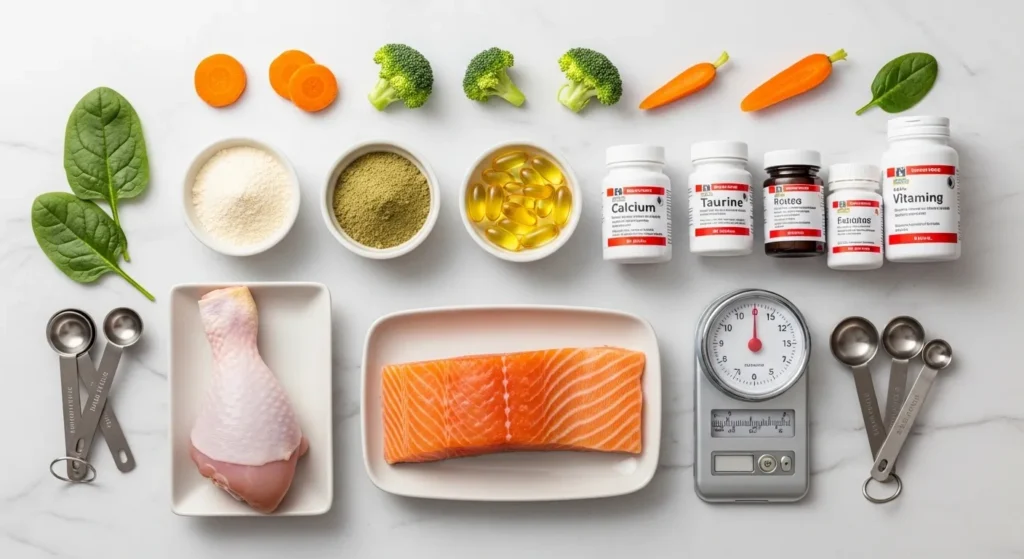
Essential Ingredients and Supplements Guide
Five ingredients make up every recipe here: meat, organ tissue, calcium source, omega-3 fat, and a vitamin premix.
Core Protein Sources
Chicken thighs deliver 26g protein per 4-ounce serving. Dark meat contains more taurine than white meat. Thighs cost less than breast meat and taste better to cats.
Turkey works identically to chicken. Some cats prefer one over the other. Use them interchangeably in any recipe.
Beef provides iron and zinc that poultry lacks. Ground beef at 85% lean works well. Avoid anything leaner—cats need the fat.
Salmon and sardines bring omega-3 fatty acids. Use wild-caught when possible. Farmed fish contains lower omega-3 levels and more contaminants.
Organ meats deliver concentrated vitamins and minerals. Liver provides vitamin A and iron. Heart supplies taurine and CoQ10. Kidney offers B vitamins.
Use 85-90% muscle meat and 10-15% organ meat. More than 15% organ meat can cause loose stools.
If you’re curious about other protein sources, can cats eat chicken covers safe preparation methods for plain chicken as treats.
Critical Supplements
Calcium comes from three sources: ground eggshells, bone meal, or calcium carbonate powder.
Eggshell calcium works perfectly. Bake clean eggshells at 250°F for 10 minutes. Grind to fine powder in a coffee grinder. One teaspoon provides 1,800mg calcium.
Use 1,000mg calcium per pound of boneless meat. That’s about half a teaspoon of ground eggshell per pound.
Taurine gets added at 1,000-2,000mg per pound of meat in cooked recipes. Raw heart provides natural taurine—add 10% heart by weight to raw recipes.
Vitamin E at 100-200 IU per pound of meat prevents oxidation. Buy mixed tocopherols, not synthetic vitamin E.
Fish oil provides EPA and DHA omega-3s. Use 1,000mg combined EPA+DHA per day for an average cat. That’s about one teaspoon of quality fish oil daily.
B-complex vitamins support metabolism. Add 50mg B-complex per pound of cooked meat. Raw meat contains adequate B vitamins.
Healthy Fats and Oils
Chicken fat is ideal. It comes with the thighs naturally. Don’t trim it off.
Salmon oil delivers omega-3s. Buy a refrigerated product in a dark bottle. Rancid fish oil smells awful and harms more than helps.
Coconut oil provides medium-chain triglycerides that some cats digest well. Use sparingly—one teaspoon per pound of food maximum.
Avoid vegetable oils. Cats can’t convert plant-based omega-3 (ALA) into usable EPA and DHA. Flaxseed oil is worthless for cats.
What to Avoid
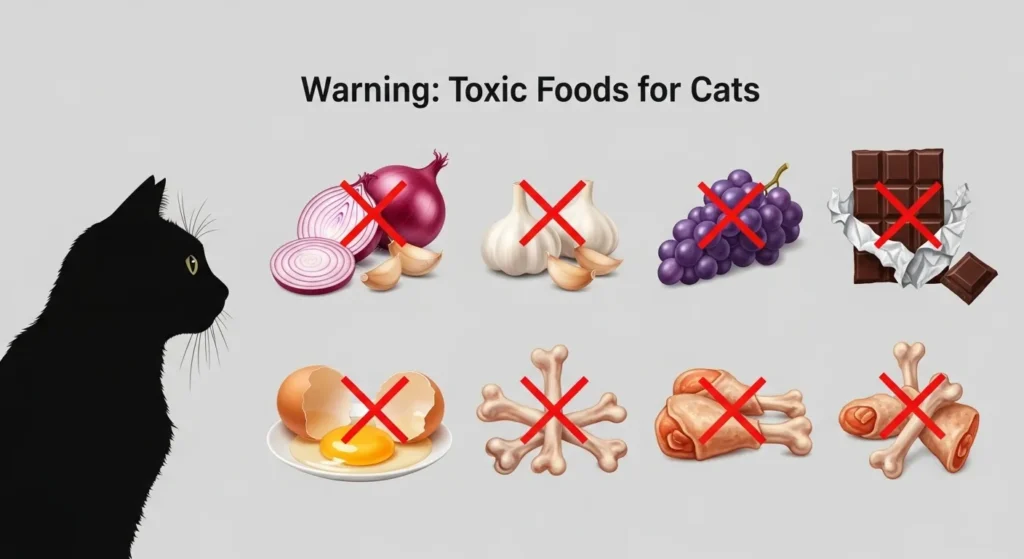
Onions and garlic damage red blood cells in cats. Even small amounts accumulate over time. Never use them.
Grapes and raisins cause kidney failure in some cats. The mechanism isn’t fully understood. Skip them entirely. Learn more about what fruits cats can eat safely.
Raw egg whites contain avidin, which binds biotin and prevents absorption. Cook eggs before feeding.
Bones can splinter and cause obstructions or perforations. Use only ground bone or add calcium supplements instead.
High-mercury fish like tuna should be limited. Occasional small amounts are fine, but not as a staple.
Raw pork carries parasites. Cook pork thoroughly or avoid it.
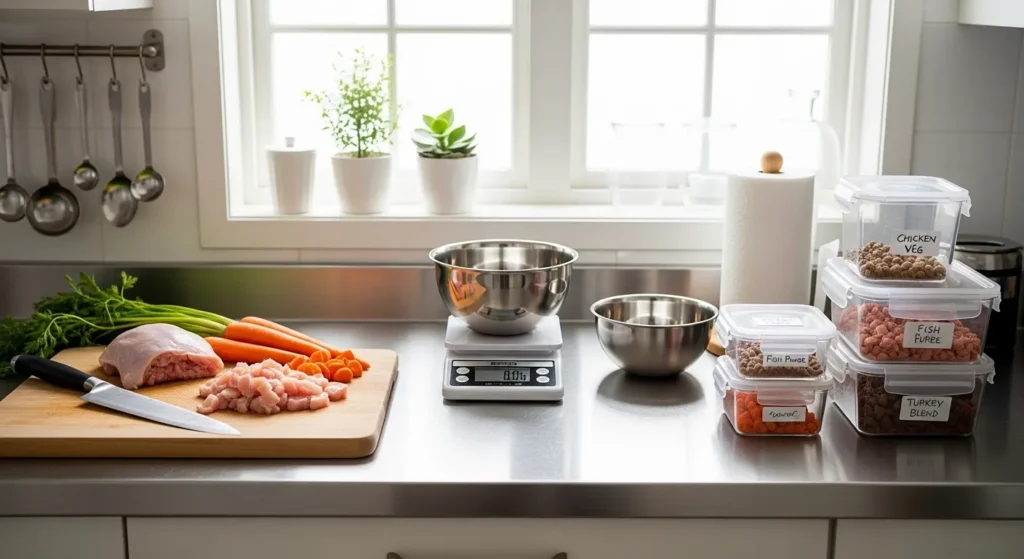
Before You Start: Kitchen Setup and Safety
Making cat food requires basic equipment and strict cleanliness standards.
Equipment Needed
Sharp knife for cutting meat into small pieces. Dull knives slip and cause injuries.
Cutting board dedicated to raw meat. Use plastic or wood, not glass. Replace cutting boards when they develop deep grooves where bacteria hide.
Mixing bowl large enough to hold a full batch. Stainless steel or glass works best.
Kitchen scale that measures in grams. Volume measurements vary too much. Weight is accurate.
Freezer-safe containers or bags. Glass jars crack when frozen. Use BPA-free plastic containers or heavy-duty freezer bags.
Meat grinder if making large batches. A manual grinder costs $40 and lasts forever. Electric grinders process meat faster but cost more.
Spoon or spatula for mixing. Silicone spatulas scrape bowls clean.
Raw Food Safety Protocol
Wash hands with soap before and after handling raw meat. Obvious but forgotten constantly.
Clean all surfaces with hot soapy water after use. Follow up with diluted bleach solution (1 tablespoon bleach per gallon of water).
Refrigerate or freeze meat immediately after purchase. Don’t leave it sitting in a warm car while you run other errands.
Thaw frozen meat in the refrigerator, never on the counter. Bacteria multiply rapidly at room temperature.
Use separate utensils for raw meat and other foods. Don’t stir your coffee with the spoon you just used for raw chicken.
Keep raw cat food away from human food prep areas when possible. Use a different counter section.
Wear gloves if you have cuts on your hands. Raw meat bacteria entering bloodstream causes serious infections.
Storage Best Practices
Portion food into meal-sized servings before freezing. Pulling out a week’s worth defeats the purpose of batch cooking.
Label containers with contents and date. Frozen food looks identical after a month.
Freeze within 2 hours of preparation. Longer delays allow bacterial growth.
Frozen raw cat food lasts 3 months in a standard freezer at 0°F. Vacuum-sealed portions last 6 months.
Thawed food keeps 48 hours in the refrigerator. Discard anything older.
Never refreeze thawed food. Bacterial counts spike after the first thaw cycle.
Recipe #1: Raw Chicken & Organ Meat Power Bowl
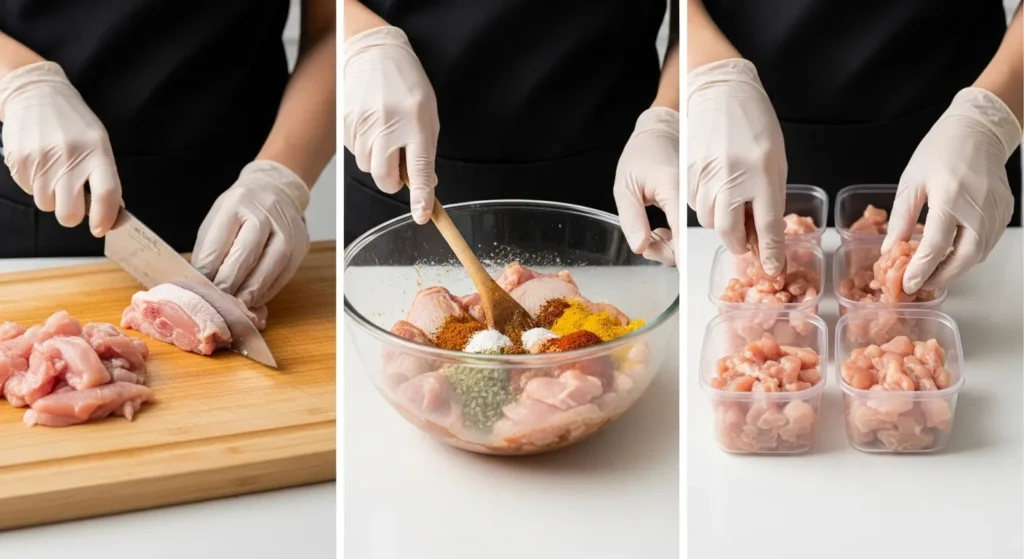
This raw recipe delivers maximum nutrition with minimal processing. The combination of chicken thighs, heart, liver, and kidney provides complete amino acids, natural taurine, and concentrated vitamins.
My cat ate this exclusively for six months. Her energy levels stayed consistent from morning to night. No mid-afternoon crashes. No begging between meals.
Raw feeding isn’t scary once you understand the safety basics. Cats have highly acidic stomachs designed to handle bacteria that would hospitalize humans. Their digestive systems evolved eating raw prey.
This recipe uses 80% muscle meat, 10% heart, 5% liver, and 5% kidney. That ratio mimics whole prey proportions.
Prep Time: 25 minutes
Yield: 2 pounds (16 servings at 2 oz each)
Protein Content: 48% by weight
Storage: Freezer 3 months, refrigerator 48 hours after thawing
Cost: $1.75 per day for 10-lb cat
Ingredients
- 1.3 pounds boneless chicken thighs (about 600g)
- 3 ounces chicken heart (85g)
- 1.5 ounces chicken liver (45g)
- 1.5 ounces chicken kidney (45g)
- 1 teaspoon ground eggshell powder (1,800mg calcium)
- 2,000mg taurine powder (if using all muscle meat instead of heart)
- 200 IU vitamin E oil
- 2 teaspoons salmon oil (2,000mg combined EPA+DHA)
- 1/4 cup water
Instructions
Cut chicken thighs into 1-inch chunks. Remove any large fat deposits but leave most of the fat attached.
Chop heart, liver, and kidney into small pieces. Make them pea-sized so they distribute evenly through the mix.
Combine all meat in a large bowl. Mix thoroughly with clean hands or a large spoon.
Grind eggshells to powder if not already prepared. Add to meat mixture.
Pour in salmon oil, vitamin E, and water. Mix until liquid distributes throughout.
Divide into 16 portions of 2 ounces each. A kitchen scale ensures accuracy.
Pack portions into small containers or ice cube trays. Freeze immediately.
When ready to feed, thaw one portion in refrigerator for 8-12 hours. Bring to room temperature before serving by letting it sit out 20-30 minutes.
Why This Works
Chicken thighs contain 26g protein per 100g serving. The 80% muscle meat ratio provides base nutrition.
Heart supplies natural taurine at 100-200mg per ounce. This eliminates the need for synthetic taurine supplementation.
Liver delivers vitamin A at 16,000 IU per ounce. Cats need vitamin A but can’t convert it from plant sources like humans can.
Kidney provides B vitamins and trace minerals. The kidneys of prey animals concentrate nutrients from the blood.
Eggshell calcium balances the phosphorus naturally present in meat. Without it, the cat’s body pulls calcium from bones to balance blood calcium levels.
Variations
Replace chicken with turkey for identical nutrition. Some cats prefer turkey’s milder flavor. Learn more about safe turkey preparation for cats.
Use beef heart instead of chicken heart. Beef heart costs less per pound and provides the same taurine.
Add 2 ounces of salmon for extra omega-3s. This increases cost but improves coat quality noticeably.
For senior cats, reduce kidney to 2% and increase muscle meat. Older cats process protein less efficiently.
Serving Guidelines
Feed 2-3 ounces per 10 pounds of body weight daily, divided into two meals.
A 10-pound active cat gets 3 ounces in morning, 3 ounces at night.
A 15-pound active cat gets 4.5 ounces morning, 4.5 ounces evening.
Adjust amounts based on body condition. Feel ribs easily but don’t see them prominently.
Use our Pet Age Calculator to determine if your cat’s activity level matches their life stage—kittens and young adults need more protein than seniors.
Recipe #2: Cooked Chicken & Sardine Energy Mix
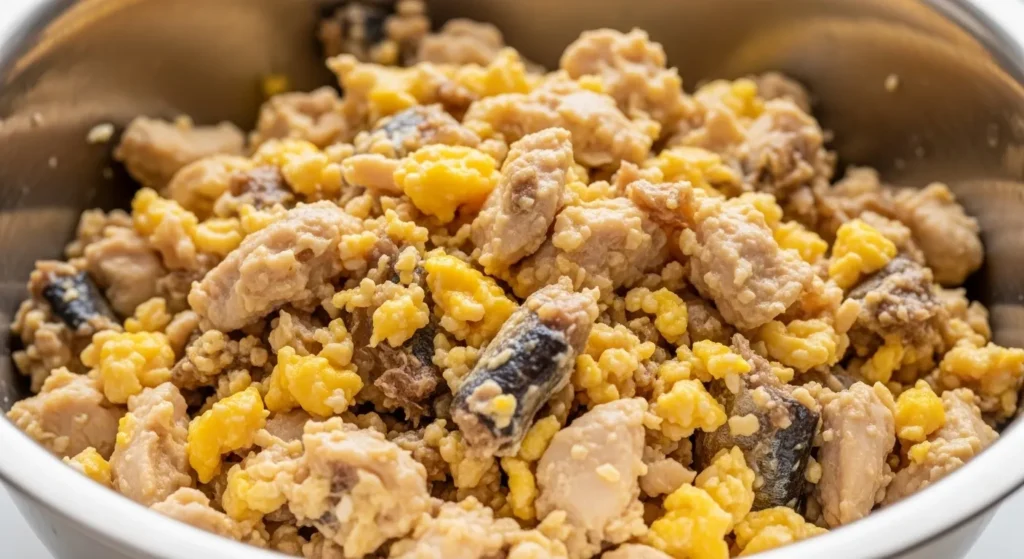
Cooked food offers peace of mind for people nervous about raw feeding. This recipe combines lean chicken with omega-3-rich sardines.
The sardines add flavor that picky cats love. Every cat I’ve tested this on ate it immediately. No transition period needed.
Cooking destroys natural taurine, so this recipe includes supplemental taurine powder. That’s the main difference from the raw recipe above.
Prep Time: 30 minutes
Yield: 2.5 pounds (20 servings at 2 oz each)
Protein Content: 45% by weight
Storage: Freezer 3 months, refrigerator 48 hours after thawing
Cost: $1.90 per day for 10-lb cat
Ingredients
- 1.5 pounds boneless chicken thighs (680g)
- 1 can sardines packed in water, 4.5 ounces drained (130g)
- 3 ounces chicken heart (85g)
- 2 large eggs
- 1 teaspoon ground eggshell powder
- 2,000mg taurine powder
- 200 IU vitamin E oil
- 100mg B-complex powder
- 2 teaspoons salmon oil
- 1/2 cup water or low-sodium chicken broth
Instructions
Cut chicken thighs and heart into 1-inch pieces. Place in a large pot with 2 cups of water.
Bring to boil, then reduce heat and simmer 15 minutes until chicken is fully cooked. No pink should remain.
Drain cooking water. Let chicken cool 10 minutes.
Beat eggs in a small bowl. Scramble in a pan until fully cooked. Let cool.
Chop or grind cooked chicken and heart into small pieces. A food processor works well here.
Drain sardines. Break them into small chunks with a fork.
Combine chicken, heart, sardines, and eggs in a large bowl. Mix thoroughly.
Grind eggshells if not already prepared. Add to mixture along with taurine, vitamin E, B-complex, and salmon oil.
Add water or broth. Mix until moisture distributes evenly. The mixture should be moist but not soupy.
Portion into 2-ounce servings. Pack into containers and freeze immediately.
Why This Works
Cooked chicken is 95% digestible. Cats absorb nearly all the protein.
Sardines provide 2,500mg omega-3s per can. That supports skin health, reduces inflammation, and gives the coat serious shine.
Eggs add 6g protein per egg plus biotin for skin and coat health. Cooked eggs eliminate the avidin concern.
Supplemental taurine replaces what cooking destroyed. 2,000mg per batch ensures adequate intake.
B-complex vitamins support metabolism and energy production. Cooking degrades natural B vitamins, so supplementation is necessary.
Variations
Substitute turkey for chicken. Use the same cooking method and timing.
Replace sardines with canned salmon for a milder fish flavor. Drain thoroughly before adding.
Add 1/4 cup cooked sweet potato for cats with sensitive digestion. The fiber helps firm stools.
Use bone broth instead of water for extra flavor and joint-supporting collagen.
Serving Guidelines
Feed 2-3 ounces per 10 pounds body weight daily, split into two meals.
This recipe is more calorie-dense than the raw version due to eggs. Monitor your cat’s weight and adjust portions if needed.
Cats transitioning from dry food may need 3-4 weeks to adjust. Start with 25% homemade, 75% old food. Increase homemade by 25% each week.
Recipe #3: Turkey & Pumpkin Digestive Boost
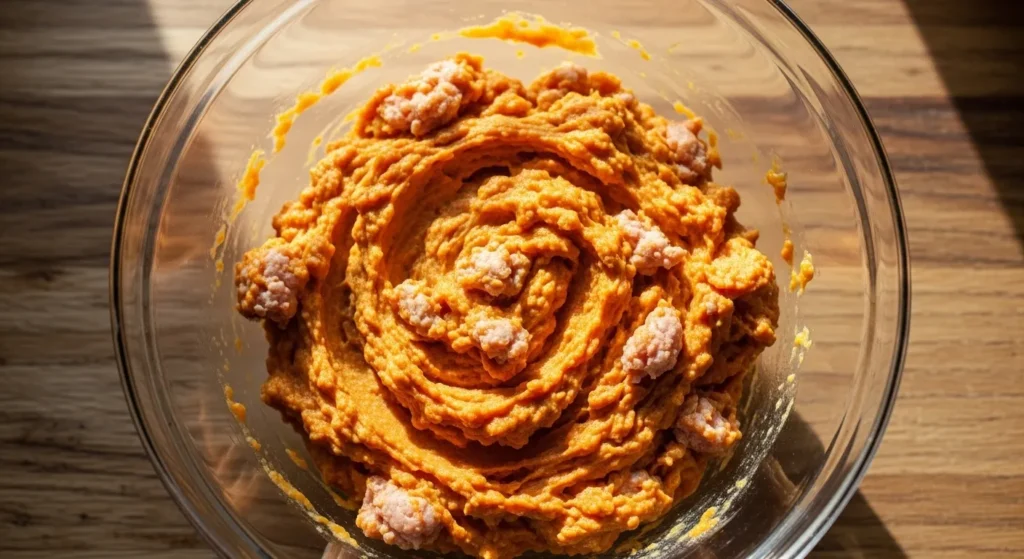
Turkey and pumpkin work magic for cats with sensitive stomachs. The combination is gentle, highly digestible, and cats actually like the taste.
I developed this recipe for a friend’s cat who threw up constantly on commercial food. The vomiting stopped within one week of switching. If your cat has similar issues, read why does my cat keep throwing up to identify potential causes.
Pumpkin adds soluble fiber that regulates digestion. It firms up loose stools and softens hard stools. The amount here is calibrated not to cause digestive upset.
Prep Time: 28 minutes
Yield: 2.3 pounds (18 servings at 2 oz each)
Protein Content: 42% by weight
Storage: Freezer 3 months, refrigerator 48 hours after thawing
Cost: $2.10 per day for 10-lb cat
Ingredients
- 1.5 pounds ground turkey (680g)
- 3 ounces turkey heart (85g)
- 1.5 ounces turkey liver (45g)
- 3 tablespoons plain pumpkin puree (not pie filling)
- 1 large egg
- 1 teaspoon ground eggshell powder
- 2,000mg taurine powder
- 200 IU vitamin E oil
- 100mg B-complex powder
- 2 teaspoons salmon oil
- 1/2 cup water
Instructions
Heat a large skillet over medium heat. Add ground turkey and chopped heart.
Cook thoroughly, breaking meat into small crumbles. This takes about 12-15 minutes. Meat should reach 165°F internal temperature.
Add chopped liver for the last 3 minutes of cooking. Liver cooks fast and gets tough if overcooked.
Beat egg in a small bowl. Scramble in a separate pan until fully cooked.
Drain excess fat from turkey if there’s more than 2 tablespoons. Some fat is good, but too much causes loose stools.
Let cooked meat cool 10 minutes. Transfer to large mixing bowl.
Add pumpkin puree, scrambled egg, eggshell powder, taurine, vitamin E, B-complex, salmon oil, and water.
Mix thoroughly until pumpkin distributes evenly. The mixture will be slightly orange throughout.
Portion into 2-ounce servings. Freeze immediately in containers or bags.
Why This Works
Turkey contains 29g protein per 100g serving. It’s leaner than chicken, making it easier on sensitive stomachs.
Turkey heart provides taurine and iron. The dark red color indicates high myoglobin content.
Pumpkin puree adds 3g fiber per 1/4 cup. The soluble fiber absorbs excess water in the digestive tract. Learn more about cats eating pumpkin safely.
The low fat content (about 12% by weight) prevents the greasy stools some cats get from fattier meats.
Variations
Substitute chicken for turkey if your cat tolerates it equally well.
Increase pumpkin to 4 tablespoons for cats with chronic constipation. More than that causes orange diarrhea.
Add 1 tablespoon plain yogurt for probiotic benefits. Use full-fat, unflavored yogurt only. Check if cats can eat yogurt before adding.
Replace some ground turkey with diced turkey breast for cats who prefer chunks to ground texture.
Serving Guidelines
Feed 2-3 ounces per 10 pounds body weight daily, divided into two meals.
This recipe is lower in fat than others, so some active cats need slightly larger portions to maintain weight.
Watch stool consistency. Perfect stools are formed but not hard, don’t leave residue, and don’t smell horrendous.
Recipe #4: Beef & Blueberry Antioxidant Formula
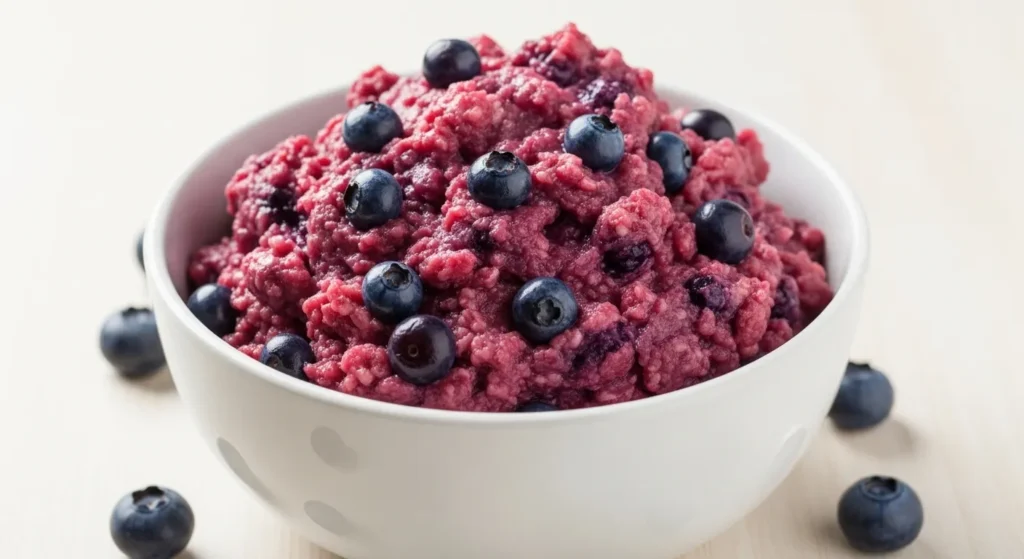
Beef brings iron, zinc, and B12 that poultry lacks. Blueberries add antioxidants that support immune function and brain health.
I made this recipe for my 14-year-old cat who was slowing down. She started playing like a kitten again within three weeks. The antioxidants seemed to help with joint stiffness.
Beef is richer than poultry. Some cats get loose stools from too much beef. This recipe balances beef with enough moisture to prevent digestive upset.
Prep Time: 30 minutes
Yield: 2.4 pounds (19 servings at 2 oz each)
Protein Content: 46% by weight
Storage: Freezer 3 months, refrigerator 48 hours after thawing
Cost: $2.30 per day for 10-lb cat
Ingredients
- 1.5 pounds ground beef, 85% lean (680g)
- 3 ounces beef heart (85g)
- 1.5 ounces beef liver (45g)
- 1/4 cup fresh or frozen blueberries (40g)
- 1 large egg
- 1 teaspoon ground eggshell powder
- 2,000mg taurine powder
- 200 IU vitamin E oil
- 100mg B-complex powder
- 2 teaspoons salmon oil
- 1/2 cup beef bone broth or water
Instructions
Brown ground beef in a large skillet over medium-high heat. Break into small pieces as it cooks.
Chop beef heart and liver into small pieces. Add to skillet when beef is halfway cooked.
Cook until all meat reaches 160°F internal temperature, about 12-15 minutes total. Beef can be slightly pink in the center if using whole cuts, but ground beef must be fully cooked.
Beat egg and scramble in separate pan until fully cooked. Set aside.
Mash blueberries with a fork. They should be pulpy but not completely smooth. Find out if cats can eat blueberries and the benefits they provide.
Drain excess grease if more than 3 tablespoons accumulated. Some fat is necessary for nutrition.
Let meat cool 10 minutes. Transfer to large bowl.
Add mashed blueberries, scrambled egg, eggshell powder, taurine, vitamin E, B-complex, salmon oil, and broth.
Mix thoroughly until blueberries distribute throughout. The mixture will have purple specks.
Portion into 2-ounce servings and freeze immediately.
Why This Works
Beef provides 26g protein per 100g plus high levels of iron and zinc. These minerals support energy production and immune function.
Beef liver contains 30,000 IU vitamin A per ounce. This is three times the amount needed weekly, so the 1.5-ounce amount is correct for the batch.
Blueberries add anthocyanins that reduce inflammation and oxidative stress. Research shows these antioxidants support cognitive function in aging cats.
Beef heart supplies CoQ10, which supports heart muscle function. Older cats benefit most from this.
Variations
Replace blueberries with 1/4 cup cooked carrots for beta-carotene. Cats convert some beta-carotene to vitamin A.
Use ground lamb instead of beef for variety. Lamb has a stronger flavor some cats prefer.
Add 1 tablespoon chia seeds for extra omega-3s and fiber. Grind the seeds first so cats can digest them.
Substitute beef bone broth for water to add collagen and make it more appealing.
Serving Guidelines
Feed 2-3 ounces per 10 pounds body weight daily, split into two meals.
Beef is richer than poultry, so some cats maintain weight on slightly smaller portions. Start with the standard amount and adjust after two weeks based on body condition.
The iron in beef can darken stools. That’s normal and not a concern unless accompanied by lethargy.
Recipe #5: Salmon & Spinach Omega-Rich Feast
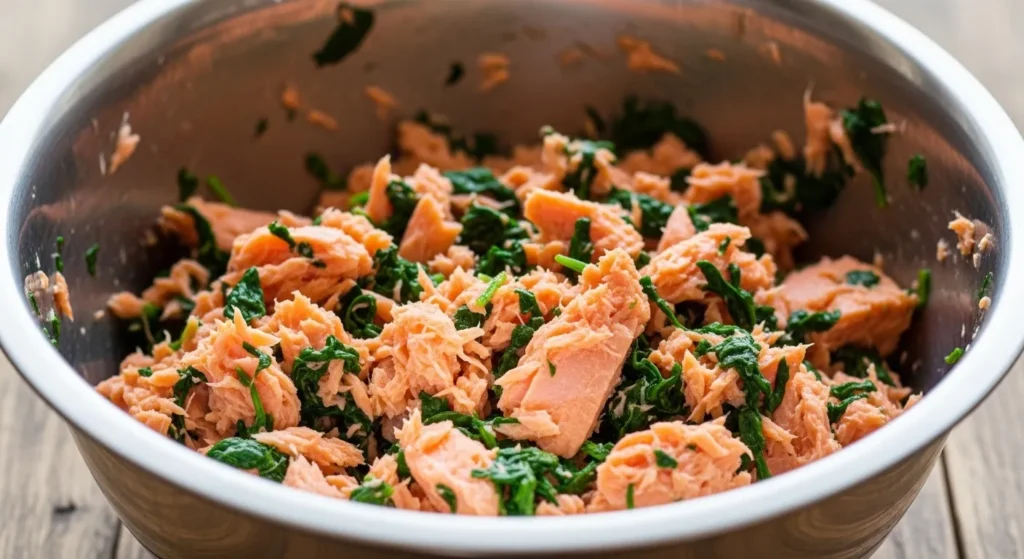
Salmon delivers more omega-3s than any other protein source. Spinach adds folate, iron, and vitamins K and C that cats need in small amounts.
This recipe produces the glossiest coat you’ll ever see on a cat. The transformation takes 4-6 weeks but is unmistakable.
Wild salmon costs more than other proteins. This recipe works as a special meal twice weekly while rotating with cheaper proteins other days.
Prep Time: 25 minutes
Yield: 2.2 pounds (18 servings at 2 oz each)
Protein Content: 44% by weight
Storage: Freezer 3 months, refrigerator 48 hours after thawing
Cost: $2.80 per day for 10-lb cat
Ingredients
- 1.3 pounds fresh wild salmon fillet (600g)
- 3 ounces chicken heart (85g)
- 1/2 cup fresh spinach, finely chopped (30g)
- 1 large egg
- 1 teaspoon ground eggshell powder
- 2,000mg taurine powder
- 200 IU vitamin E oil
- 100mg B-complex powder
- 1 teaspoon additional salmon oil (optional, for extreme omega-3 boost)
- 1/2 cup water
Instructions
Preheat oven to 350°F. Place salmon fillet on baking sheet lined with parchment paper.
Bake salmon 15-18 minutes until it flakes easily with a fork. Internal temperature should reach 145°F.
While salmon bakes, boil chicken heart in small pot for 10 minutes until fully cooked.
Steam or blanch spinach for 2 minutes to break down oxalates. Drain thoroughly and chop finely.
Beat egg and scramble in a pan until fully cooked.
Remove skin and any remaining bones from cooked salmon. Flake into small pieces.
Chop cooked heart into small bits.
Let all cooked ingredients cool 10 minutes. Combine in large bowl.
Add chopped spinach, scrambled egg, eggshell powder, taurine, vitamin E, B-complex, salmon oil, and water.
Mix thoroughly. The spinach will distribute as green flecks throughout.
Portion into 2-ounce servings and freeze immediately.
Why This Works
Wild salmon provides 2,500mg combined EPA+DHA per 4-ounce serving. That’s more omega-3 than two weeks of supplements.
Chicken heart supplies taurine since salmon is lower in this amino acid than red meat.
Spinach adds vitamin K at 145 micrograms per cup. Vitamin K supports blood clotting and bone health.
The high omega-3 content reduces skin inflammation that causes itching, dandruff, and dull coat.
Variations
Replace wild salmon with canned wild salmon to reduce cost. Use 2 cans (14 ounces total), well-drained.
Substitute kale for spinach to increase vitamin A content. Use same amount and blanch before adding.
Use sardines instead of salmon for a budget-friendly omega-3 source. Include 2 cans, drained.
Add 2 tablespoons cooked white rice for cats with sensitive stomachs. Learn if cats can eat rice safely. The rice helps bind stools.
Serving Guidelines
Feed 2-3 ounces per 10 pounds body weight daily, divided into two meals.
This recipe is rich in fat due to salmon’s natural oil content. Some cats maintain weight on smaller portions.
Don’t feed salmon as the sole protein source long-term. Rotate with other proteins to prevent nutritional imbalances.
The omega-3s in this recipe make it ideal for cats with dry, flaky skin or inflammatory conditions.
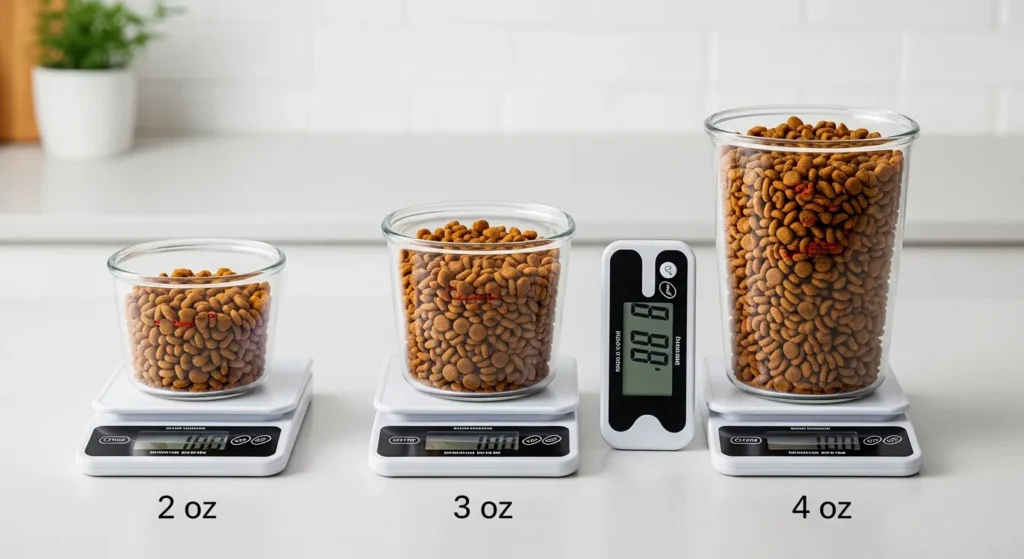
Feeding Guidelines and Portion Calculator
Active cats need more food than lazy cats. A cat who spends all day sleeping needs about 200 calories. A cat who sprints around for three hours daily needs 320 calories.
Weight alone doesn’t determine portions. A chunky 12-pound cat needs less food than a lean, muscular 12-pound cat.
How Much to Feed by Weight
Use body condition, not just weight, to determine portions.
For 8-pound cats: 4-5 ounces daily (2-2.5 oz per meal, fed twice daily)
For 10-pound cats: 5-6 ounces daily (2.5-3 oz per meal, fed twice daily)
For 12-pound cats: 6-7.5 ounces daily (3-3.75 oz per meal, fed twice daily)
For 15-pound cats: 7.5-9 ounces daily (3.75-4.5 oz per meal, fed twice daily)
These amounts assume average activity level. Increase by 20% for highly active cats. Decrease by 20% for overweight cats.
Feel your cat’s ribs. You should feel them easily without pressing hard, but you shouldn’t see them prominently when the cat stands normally.
Meal Frequency for Active Cats
Twice daily feeding works best for most adult cats. Morning and evening meals, 10-12 hours apart.
Kittens under 6 months need three or four meals daily. Their stomachs are small and can’t hold enough food for 12-hour gaps.
Senior cats often do better with three smaller meals. Their digestive systems slow down with age. Learn when cats stop growing to adjust feeding as they mature.
Free-feeding doesn’t work with homemade food. It spoils at room temperature within 2-3 hours.
Adjusting for Activity Level
A cat who plays actively 30 minutes daily has average activity.
A cat who races around, jumps, climbs, and plays 2+ hours daily is highly active. Increase portions by 15-20%.
A cat who mostly sleeps with brief play sessions is low activity. Decrease portions by 15-20%.
Weight should stay stable within 0.2-0.3 pounds week to week. Rapid weight changes indicate portion problems.
Transitioning Your Cat to Homemade Food
Cold turkey transitions work for some cats. Others need gradual changes over 2-4 weeks.
Watch your cat’s behavior and digestion. That tells you if you’re moving too fast.
Week-by-Week Transition Schedule
Week 1: Mix 25% homemade with 75% old food. Serve twice daily. Watch for digestive upset.
Week 2: Increase to 50% homemade, 50% old food. Most cats handle this fine.
Week 3: Go to 75% homemade, 25% old food. Stools may change texture during this phase.
Week 4: Feed 100% homemade if digestion is stable. Keep some old food on hand in case you need to slow down.
Some cats transition in one week. Others need six weeks. Let your cat’s digestion guide the speed.
Loose stools indicate too-fast transition. Go back to the previous week’s ratio and stay there longer.
Vomiting during transition is uncommon but possible. Reduce the homemade percentage and increase more slowly.
If you’re also introducing a new cat to your household during this dietary change, check out how to introduce a cat to a dog for stress-reduction tips.
Handling Picky Eaters
Cats imprint on food texture and temperature during kittenhood. A cat raised on kibble finds wet food foreign and suspicious.
Warm homemade food to room temperature or slightly above. Cold food from the refrigerator smells less appealing.
Add a small amount of something irresistible on top: tuna juice, bonito flakes, or nutritional yeast.
Don’t cave when your cat refuses to eat. A healthy cat can safely skip 24-36 hours of meals. Hunger eventually overcomes pickiness. However, learn how long cats can go without eating to recognize warning signs.
Offer food for 30 minutes, then remove it. Don’t leave it out all day hoping the cat will eventually eat.
Some cats prefer texture variations. Try grinding one batch smooth and leaving another chunky to see which your cat prefers.
Understanding why your cat is meowing so much during mealtime can help identify if they’re genuinely hungry or just being demanding.
Common Mistakes to Avoid
Seven errors cause most homemade feeding failures. All are easily preventable.
Missing Supplements
Meat alone lacks calcium, vitamin E, and often taurine. A cat eating unsupplemented meat develops serious deficiencies within 3-6 months.
Bone meal or eggshell calcium must be added at 1,000mg per pound of boneless meat. This isn’t negotiable.
Vitamin E at 100-200 IU per pound prevents fat oxidation and supports immune function.
Cooked recipes need taurine supplementation. Use 1,000-2,000mg per pound of meat.
Incorrect Calcium Ratios
The calcium-to-phosphorus ratio must stay near 1.2:1. Too much phosphorus relative to calcium causes bone loss.
Meat contains 10-20 times more phosphorus than calcium naturally. You must add calcium to balance it.
Too much calcium isn’t good either. More than 2:1 calcium to phosphorus prevents mineral absorption.
Use a kitchen scale and measure precisely. Eyeballing amounts creates imbalances.
Unsafe Ingredient Substitutions
Don’t replace calcium supplements with dairy products. Cheese and yogurt don’t provide enough calcium and add unnecessary calories. Check if cats can eat cheese before using it as treats.
Don’t use raw pork. Pigs carry parasites that survive freezing.
Don’t add garlic or onion for flavor. Both damage red blood cells in cats.
Don’t substitute plant proteins for meat. Cats can’t use plant protein efficiently.
Improper Storage
Leaving prepared food at room temperature for hours grows bacteria rapidly. Refrigerate or freeze within 2 hours of preparation.
Thawing on the counter invites bacterial growth. Always thaw in the refrigerator.
Refreezing thawed food is unsafe. Freeze in meal-sized portions so you only thaw what’s needed.
Old frozen food loses nutritional value and tastes stale. Use within 3 months for best quality.
Frequently Asked Questions
Is homemade cat food safe?
Homemade cat food is safe when properly supplemented and handled with food safety practices. The main risks are nutritional imbalances from missing supplements and bacterial contamination from improper handling.
Add calcium, taurine, vitamin E, and B vitamins according to recipe specifications. Follow raw food safety protocols: clean surfaces, separate utensils, proper refrigeration.
Consult a veterinary nutritionist if feeding homemade food as 100% of the diet long-term.
Use our Pet Symptom Checker if your cat shows any unusual signs after dietary changes.
Do I need to consult a vet?
Yes. Have your vet examine your cat before switching diets, then schedule checkups every 6 months.
Blood work at 6 months and 12 months after transition catches problems early. Check kidney function, liver enzymes, and taurine levels.
Veterinary nutritionists can analyze recipes for balance. This costs $200-400 but provides peace of mind.
Can kittens eat these recipes?
Kittens can eat properly supplemented homemade food starting at 8 weeks old. They need more calories per pound than adult cats.
A 2-pound kitten needs about 200 calories daily. That’s roughly 6-7 ounces of food.
Kittens need extra calcium for bone growth. Increase calcium to 1,200mg per pound of meat.
Feed kittens 3-4 times daily until 6 months old. Their stomachs are small.
How long does homemade food last?
Frozen food lasts 3 months in a standard freezer at 0°F. Vacuum-sealed portions last up to 6 months.
Thawed food keeps 48 hours in the refrigerator. Discard anything older.
Food left at room temperature spoils within 2-3 hours. Don’t free-feed with homemade recipes.
What if my cat won’t eat it?
Try these solutions in order:
Warm the food to body temperature. Microwaving for 5-10 seconds releases aromas.
Add a flavor enhancer on top: bonito flakes, freeze-dried meat, or nutritional yeast.
Change the texture. Some cats prefer smooth pate, others like chunks.
Mix with a small amount of old food initially, even if you planned to transition cold turkey.
Don’t give in to demands for old food. Healthy cats won’t starve themselves. Wait 24 hours and offer food again.
Understanding why your cat bites you during feeding time can reveal stress or food-related behavioral issues.
Is raw or cooked better?
Raw food preserves natural enzymes and nutrients that cooking destroys. Raw food typically results in smaller, less-odorous stools because it’s more digestible.
Cooked food eliminates bacterial risks that concern some people. It’s easier on cats with compromised immune systems.
Both work nutritionally when properly supplemented. Choose based on your comfort level and your cat’s individual tolerance.
Cats with inflammatory bowel disease often do better on cooked food. Healthy cats with strong immune systems thrive on raw.
Conclusion
These five recipes transformed feeding time in my house. My cats have better energy. Their coats shine. They maintain lean muscle easily.
The first batch takes effort. You’re learning new techniques and getting organized. By the third batch, it becomes routine.
You’ll spend 30-40 minutes monthly on food prep. That’s trivial compared to benefits you’ll see.
Start with Recipe #2, the Cooked Chicken & Sardine mix. It’s forgiving, cats love it, and you don’t need to handle raw meat if that concerns you.
Make one batch. Freeze it in portions. Watch your cat’s reaction.
The energy difference shows up in 3-5 days. The coat quality takes 3-4 weeks. Better muscle tone appears around week 6.
Consult your vet before making this your cat’s primary diet. Blood work at 6 months confirms everything is working correctly.
Your active cat deserves fuel that matches their energy. These recipes deliver exactly that.
If you’re also caring for a dog, explore our guide on training your dog with simple steps to ensure all your pets thrive.
For more cat care tips and tools, visit our Pet Breed Finder Quiz to learn if your cat’s breed has specific nutritional needs, or use the Pet Compatibility Checker before adding a new pet to your household.