
Cats hate citrus, peppermint, vinegar, eucalyptus, lavender, cinnamon, and several essential oils. Their sense of smell is roughly 14 times stronger than a human’s — what smells faintly pleasant to you can feel genuinely overwhelming to them.
That sensitivity cuts both ways. It means you can use certain scents to keep cats off furniture or out of garden beds. But it also means the wrong scent — sprayed near a litter box or diffused through a bedroom — can do real harm. If you’re also wondering how to keep cats off counters, scent-based deterrents are one of the most effective tools available.
This guide covers all 15 scents cats dislike, breaks down which ones are toxic versus just unpleasant, and tells you exactly how to use them safely.
Why Cats Are So Sensitive to Smell
A human nose contains around 5 million olfactory receptors. A cat’s nose contains approximately 200 million. That’s not a small difference — it means your cat is processing scent information at a completely different scale than you are.
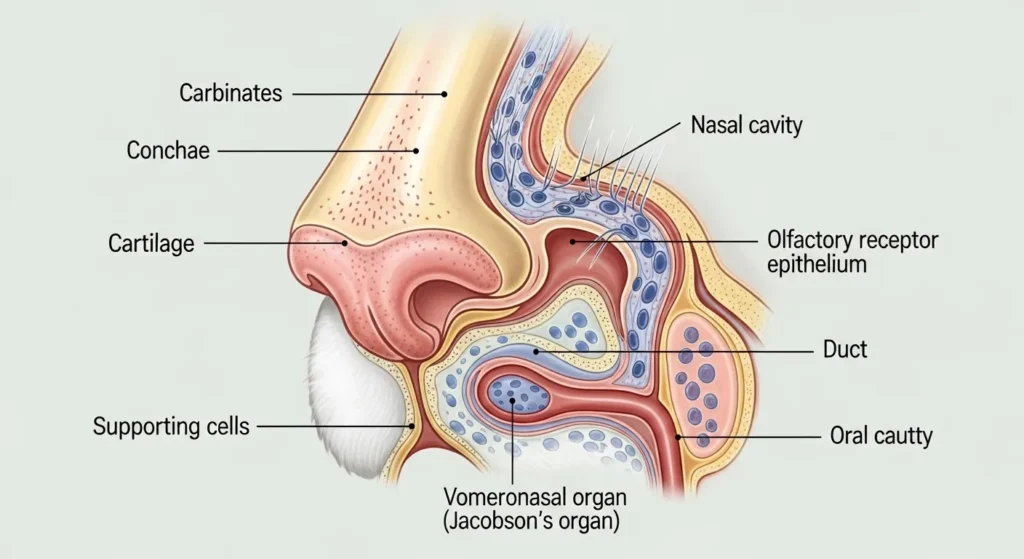
The Jacobson’s Organ
Cats have a second smell system that humans don’t actively use: the vomeronasal organ, also called Jacobson’s organ. It sits on the roof of the mouth and picks up chemical signals that the nose can’t detect on its own.
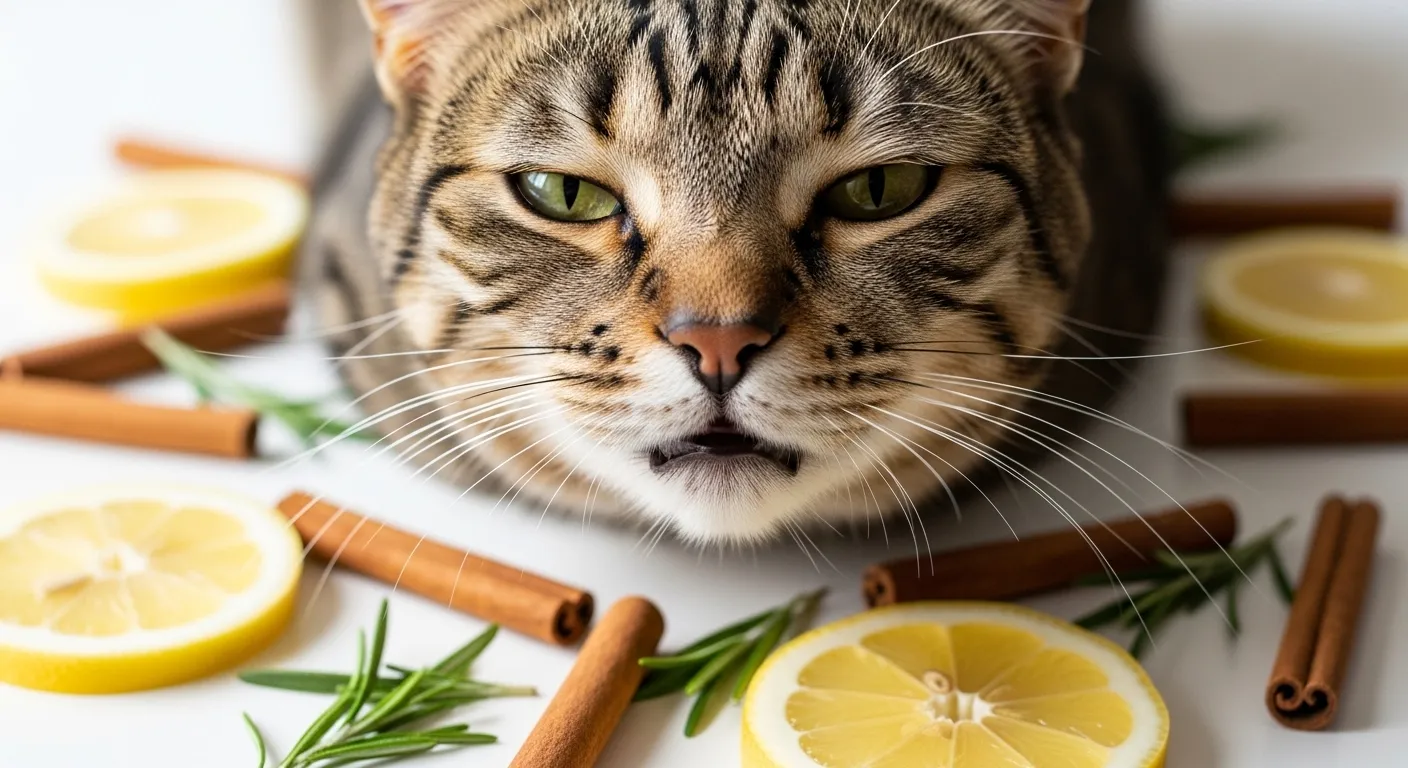
When you see a cat sniff something and then hold their mouth slightly open with a strange, almost disgusted expression — that’s called the flehmen response. They’re pulling scent molecules into Jacobson’s organ for a deeper read. If they’re doing it around a smell you introduced, that smell registered hard.
What This Means in Practice
A scent that seems mild to you — a lavender candle, a citrus cleaner, a peppermint diffuser — can be genuinely irritating at the level a cat experiences it. This is why cats often leave rooms when certain products are used, sneeze repeatedly near cleaning sprays, or avoid furniture that’s been freshly treated with essential oil blends. If your cat is sneezing frequently after you’ve introduced a new scented product, that’s usually the first signal something is off.
It’s not attitude. It’s biology.
15 Smells Cats Hate Most

1. Citrus
Lemons, limes, oranges, and grapefruit are at the top of nearly every cat’s hate list. The compounds responsible are limonene and linalool — both found in citrus peels and citrus-based cleaners. These are not just unpleasant to cats. In concentrated form, they’re toxic.
Fresh citrus peel placed near a plant works as a mild deterrent. A citrus essential oil diffused in an enclosed room is a different situation entirely — don’t do it. If you enjoy giving your cat fruit as an occasional treat, it’s worth checking what fruits cats can safely eat before offering anything.
2. Peppermint and Menthol
Peppermint oil contains menthol and other compounds that overwhelm a cat’s olfactory system fast. Many cats will physically recoil from peppermint — backing away, shaking their head, or leaving the area entirely.
Peppermint is also on the ASPCA’s toxic plant list. Ingestion causes vomiting, diarrhea, and lethargy. Even skin contact with peppermint oil has caused neurological symptoms in cats. Treat it as toxic, not just unpleasant. For context, it’s worth noting that peppermint oil also carries risks for dogs — so it’s a substance worth keeping away from all pets.
3. Lavender
Lavender smells calming to most humans. Cats read it differently. The linalool and linalyl acetate in lavender are compounds cats cannot metabolize efficiently due to limited liver enzyme activity.
Fresh lavender in a garden is low-risk — most cats will simply avoid it. Lavender essential oil is a different matter. Concentrated lavender oil can cause nausea, vomiting, and lethargy. For a full breakdown of lavender’s risks to cats specifically, see our guide on whether lavender is safe for cats. It should not be diffused in spaces cats occupy.
4. Eucalyptus
Eucalyptus contains eucalyptol, a compound that causes significant olfactory irritation in cats. The smell alone is enough to drive most cats out of a room.
The danger here is real. Eucalyptus is toxic to cats whether inhaled in high concentration, absorbed through skin, or ingested by grooming. Signs of eucalyptus toxicity include drooling, vomiting, and tremors. Keep eucalyptus branches — real or artificial — out of reach, and don’t diffuse eucalyptus oil around cats.
5. Cinnamon
Cinnamon has a sharp, spicy profile that most cats find deeply unpleasant. The active compound, cinnamaldehyde, is an irritant to mucous membranes — so the smell doesn’t just register as bad, it physically irritates.
Cinnamon sticks placed near houseplants can deter cats from digging in soil. Powdered cinnamon near food areas is a bad idea — it can cause mouth irritation, coughing, and in large quantities, liver damage.
6. Cayenne Pepper and Capsaicin
Capsaicin is the compound that makes peppers hot. Cats have receptors that respond to it the same way humans do — it triggers a burning sensation. One sniff of a cayenne-heavy area is usually enough to make a cat associate that spot with discomfort.
This makes cayenne effective as a garden deterrent. Sprinkle it around plant beds and cats tend to stay clear. The catch: capsaicin can cause eye irritation and mouth pain if a cat walks through it and then grooms their paws. Use it in areas cats won’t physically contact, not on surfaces they walk on.
7. Vinegar
Vinegar has a sharp, acidic smell that cats find strongly aversive. White vinegar diluted 1:1 with water and sprayed on furniture is one of the safest deterrent methods available. It’s non-toxic and dissipates quickly.
The smell that bothers the cat fades faster than the residue that keeps working. Most cats will avoid treated surfaces for 24–48 hours after application. Reapply as needed. If you’re dealing with a urine smell problem on top of a deterrence issue, our guide on how to get cat pee out of carpet covers both cleaning and deterrence in one place.
8. Pine and Cedar
Both pine and cedar have strong terpene profiles that most cats dislike. This is why some cat litters use pine as a base — it’s effective at masking odors that cats associate with soiled litter.
However, pine essential oil and cedar oil are toxic to cats. Pine oil in particular can cause liver damage. The smell of pine-scented floor cleaners is irritating to cats even at low concentrations. Use them only in ventilated areas and keep cats off treated floors until fully dry.
9. Rosemary
Rosemary is generally safe for cats in small quantities but the strong camphor-like scent makes it an effective deterrent. Fresh rosemary sprigs placed in soil or near plants discourage cats from digging. Most cats won’t approach the area.
Unlike many plants on this list, fresh rosemary carries minimal toxicity risk. It’s one of the better natural options for garden and plant protection. If you’re building a cat-safe garden, our cat-safe flowers guide is a useful companion resource for knowing what to plant alongside your deterrents.
10. Banana
Banana peels release isoamyl acetate — a chemical that some cats find deeply unpleasant. It’s not universally hated the way citrus is, but a significant number of cats will avoid areas where banana peels are present.
Fresh banana peel placed near a plant or on a countertop can work as a short-term deterrent. It’s completely non-toxic and easy to obtain. Replace every day or two as the peel dries and the scent weakens. If you’ve ever wondered whether cats can eat banana itself, the answer is yes in small amounts — check out whether cats can eat bananas safely for the full picture.
11. Coffee Grounds
Cats dislike the intense, bitter smell of coffee. Used coffee grounds spread around garden beds work as a dual-purpose deterrent — they keep cats away and add nitrogen to the soil.
Coffee grounds are low-toxicity compared to most options on this list. Large ingestion can cause caffeine-related symptoms, but a cat reacting to the smell alone presents very low risk. This is one of the better outdoor deterrent options available.
12. Their Own Dirty Litter Box
Cats have strong preferences about litter box cleanliness. A box that hasn’t been cleaned in more than 24–48 hours starts to smell offensive even to the cat that produced the waste. This is one reason cats eliminate outside the box — the smell of accumulated waste crosses their threshold.
Scoop daily. For multi-cat households, veterinary guidelines generally recommend one box per cat plus one extra. If your cat is avoiding the litter box, check out our guide on why cats spray — litter box aversion and spraying behavior are often connected.
13. Spoiled or Rancid Food Smells
Cats are obligate carnivores with highly calibrated spoilage detection. They can smell bacterial breakdown in protein sources long before humans notice anything. This is why many cats will refuse food that seems fine to you — it isn’t fine to them.
Don’t override this. A cat refusing food is often giving you accurate information. Wet food left out longer than 2–4 hours in warm conditions should be discarded. For guidance on portions and feeding schedules, our guide on how much wet food to feed your cat covers this in detail.
14. Strong Perfume and Cologne
High-concentration fragrances are overwhelming to cats. The alcohol base alone is irritating to their nasal passages. Many cats will leave a room after someone applies perfume or will avoid sitting on clothing that’s been heavily sprayed.
This isn’t a training opportunity — there’s no deterrent application here. If your cat avoids you after you apply fragrance, take that as feedback. Unscented or lightly scented personal products cause significantly less disruption for cats.
15. Tea Tree, Clove, and Thyme Essential Oils
These three deserve separate mention from other essential oils because they carry acute toxicity risk even at very low concentrations.
Tea tree oil (melaleuca) is one of the most commonly reported causes of essential oil poisoning in cats. It causes drooling, tremors, and in severe cases, liver failure. Clove oil contains eugenol, which cats cannot metabolize. Thyme oil is a mucous membrane irritant with additional toxicity concerns.
None of these should be used in any form in a home with cats — not in diffusers, not in cleaning products, not in topical applications.
Toxic Smells vs. Just Unpleasant — Know the Difference
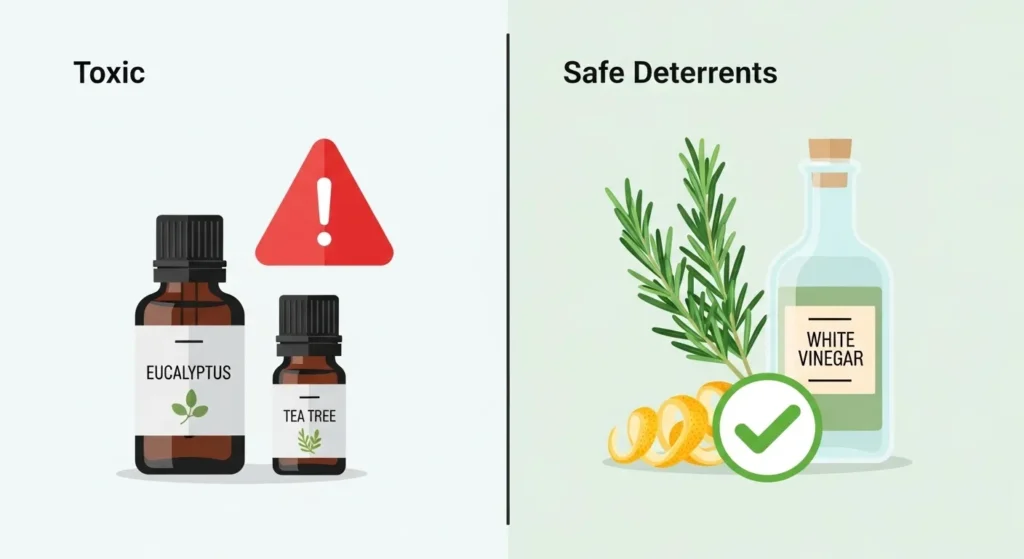
This is the section most articles skip. Knowing whether a smell is merely unpleasant or genuinely dangerous changes what you do next.
Toxic to Cats (Avoid Completely)
These smells come from substances that cause measurable harm — through inhalation, skin contact, or ingestion:
- Tea tree oil — liver toxicity, neurological symptoms
- Peppermint oil — neurological symptoms, GI distress
- Eucalyptus oil — drooling, vomiting, tremors
- Clove oil — eugenol toxicity, liver stress
- Lavender oil (concentrated) — nausea, lethargy, vomiting
- Pine oil — liver damage, CNS depression
- Thyme oil — mucous membrane damage, systemic toxicity
- Citrus essential oils — limonene toxicity, skin and liver effects
The key word is oil. Concentrated essential oils are categorically different from the fresh plant or fruit. A lemon in a fruit bowl is not the same as diffusing lemon essential oil. Similarly, tulips and certain garden plants carry their own hidden toxicity risks — our guide on whether tulips are toxic to cats is worth reading if you have fresh flowers at home.
Unpleasant but Generally Safe
These smells repel cats without meaningful toxicity risk when used appropriately:
- Diluted white vinegar
- Fresh citrus peel (not oil)
- Fresh rosemary sprigs
- Coffee grounds (used)
- Cayenne pepper (applied carefully, not on walking surfaces)
- Banana peel
- Cinnamon sticks (not powder near food)
Use these for deterrence. Skip the oils.
How to Use Smells to Deter Cats Safely
Keeping Cats Off Furniture
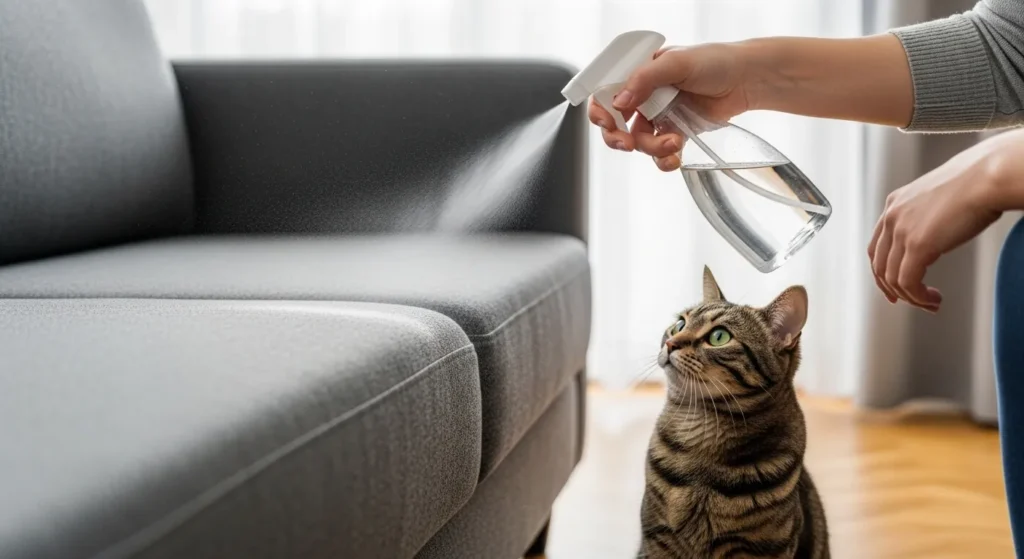
Diluted white vinegar (1 part vinegar, 1 part water) sprayed lightly on upholstery is the safest option. Test on an inconspicuous area first to check for fabric reaction. Reapply every 24–48 hours.
Citrus peel placed on cushions works for some cats. Replace every 1–2 days before the scent fades. For a more complete approach to furniture boundaries, our guide on how to keep cats off counters covers scent methods alongside physical and behavioral training techniques.
Protecting Garden Beds
Coffee grounds mixed into the top layer of soil, cayenne pepper sprinkled along edges, and fresh rosemary planted as a border are all effective and low-risk. Avoid citrus oil sprays outdoors — they degrade soil microbiota and still carry toxicity risk if a cat contacts them.
What NOT to Use as a Deterrent
Never use essential oils as deterrents — the concentration required to repel a cat approaches the concentration that can harm one. Commercial deterrent sprays that list essential oils as active ingredients deserve scrutiny. Check labels. If the active ingredient is an essential oil, choose something else.
Mothballs are sometimes suggested as outdoor deterrents. They’re highly toxic to cats (and children). Do not use them.
– Ai
Signs Your Cat Has Been Affected by a Strong Scent
Olfactory Irritation (Mild Reaction)
These signs suggest a smell is bothering your cat but hasn’t caused toxicity:
- Sneezing repeatedly
- Rubbing their nose or face
- Leaving the room or avoiding an area
- Flehmen response (open-mouth sniffing) followed by retreat
- Watery eyes
Remove the scent source. Ventilate the room. These signs usually resolve within minutes. If your cat is sneezing persistently after scent exposure, our breakdown of why cats sneeze and what causes it covers when a vet visit is warranted.
Signs of Essential Oil or Chemical Toxicity
These require immediate veterinary attention:
- Drooling or excessive salivation
- Vomiting
- Muscle tremors
- Difficulty walking or loss of coordination
- Lethargy or unresponsiveness
- Labored breathing
- Pawing at the face
If you notice any of these, especially drooling alongside lethargy, our guide on why cats drool and when it signals a problem can help you assess severity while you contact a vet. If you suspect essential oil exposure, contact your vet or the ASPCA Animal Poison Control Center at 888-426-4435 immediately. Do not wait for symptoms to worsen. You can also use a pet symptom checker to help document what you’re seeing before the call.
Frequently Asked Questions
Do all cats hate the same smells?
No. Individual variation exists. Most cats dislike citrus and peppermint, but reactions to lavender, banana, or rosemary vary by individual. A cat’s history, age, and prior exposures all affect how strongly they respond to specific scents. If your cat doesn’t react to something that usually repels cats, that’s normal — try a different deterrent.
Can I use citrus spray to keep cats off my couch?
Fresh citrus peel placed on cushions is safe and reasonably effective. Citrus essential oil sprays are not safe — limonene and linalool in concentrated form are toxic to cats. Use diluted white vinegar or fresh peel instead. Pair it with consistent cat training techniques to reinforce boundaries long-term.
What smells do cats hate that dogs don’t mind?
Citrus is the clearest example. Most dogs are attracted to or neutral about citrus smells. Cats consistently find them aversive. Vinegar is similar — dogs often sniff diluted vinegar with interest while cats avoid it. This makes citrus and vinegar useful for cat-specific deterrence in multi-pet homes. If you’re managing both cats and dogs in one household, our guide on how to introduce a cat to a dog covers territory and scent dynamics that are directly relevant.
Are scented candles bad for cats?
Scented candles present two concerns: the fragrance compounds released when burning, and airborne particles from the combustion process. In a well-ventilated room with a cat that can leave freely, occasional candle use is low-risk. Candles that use essential oil-based fragrances — especially peppermint, eucalyptus, or tea tree — in enclosed spaces are a genuine concern. Unscented or lightly fragranced candles in ventilated rooms are the safer option.
Is it cruel to use smells to deter cats?
Using non-toxic smells as deterrents isn’t cruel — it mirrors how cats naturally learn to avoid certain areas. The key is using safe substances at appropriate concentrations and ensuring the cat can always retreat. Deterrents become problematic when they’re applied to spaces a cat can’t avoid, or when the substance used causes physical harm. For positive, non-scent-based methods of managing cat behavior, see our guide on how to discipline a cat using positive methods.
Conclusion
Cats hate citrus, peppermint, eucalyptus, vinegar, cinnamon, lavender, and a range of essential oils — and their 200 million olfactory receptors make these aversions much stronger than anything you’d experience from the same scents.
The most important thing to carry away: not all repellent smells are safe smells. Essential oils that effectively repel cats do so because they’re biologically active at a level that can harm them. Stick to diluted vinegar, fresh citrus peel, coffee grounds, and rosemary when you need a deterrent. Skip the oils.
If your cat shows signs of tremors, drooling, or loss of coordination near any scented product, treat it as an emergency and call your vet. The pet symptom checker can help you track symptoms clearly before that call.