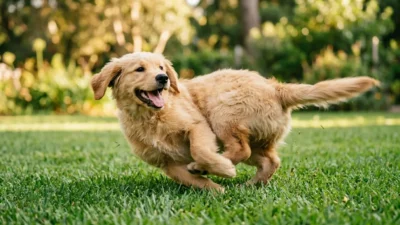

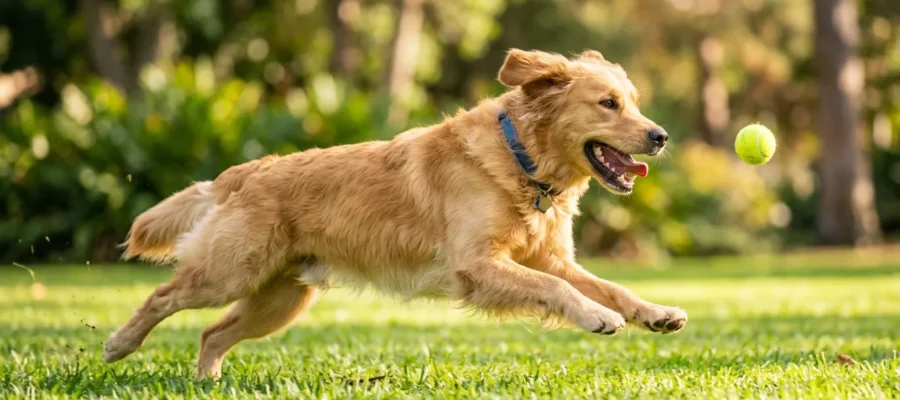
Most dog owners have seen it. You pick up a tennis ball and your dog loses it. Eyes locked on. Body tense. Tail going. It doesn’t matter what they were doing a second ago.
This isn’t random. There are real, specific reasons dogs react this way — rooted in evolution, brain chemistry, and sensory biology. All of it works together. Here’s what’s actually happening.
The Quick Answer
Dogs love tennis balls because they trigger multiple instincts at the same time. The ball’s erratic bounce mimics prey movement, activating the predatory drive. Its yellow-green color is highly visible to dogs. Its rubber scent and fuzzy texture stimulate the nose and mouth. And every successful catch floods the brain with dopamine. Six things fire at once — which is why the reaction looks so intense.
Prey Drive — It Goes Back to the Wolf
Dogs are domesticated wolves. That process took roughly 15,000–40,000 years, depending on which genetic study you follow. Domestication changed a lot. It didn’t erase the prey drive.
Wolves hunt through a sequence of behaviors that animal behaviorist David Mech documented in 1970. The sequence runs: orient → eye → stalk → chase → grab-bite → kill-bite → dissect → consume. Domestic dogs still run this same sequence — just truncated. Retrievers were selectively bred to stop at “grab-bite.” Herding breeds stop at “eye” and “stalk.” Terriers go further.
A tennis ball hits the first four stages hard. If you’ve ever wondered why your dog chases their tail with the same intensity, the same predatory motor wiring is at work.

The Predatory Motor Sequence
When you throw a tennis ball, the dog orients immediately. Then the eyes lock. Then the chase begins. The ball is moving, and moving things trigger the prey response automatically. This isn’t a decision the dog makes. It’s a motor program running on autopilot.
The predatory sequence releases endorphins at each stage. The dog doesn’t need to catch anything to feel the chemical reward. The chase itself is pleasurable. That’s why dogs will run fetch for 45 minutes without losing interest. This same drive is part of why dogs wag their tails and vocalize — arousal states from the same instinctive system expressing itself physically.
Why the Erratic Bounce Matters
A ball rolling in a straight line is less exciting than one that bounces unpredictably. This is not a coincidence.
Prey doesn’t move in straight lines. Small animals — rabbits, squirrels, birds — change direction fast. An erratic bounce mimics that. It triggers the dog’s tracking system, keeps attention locked, and elevates arousal. A standard tennis ball on grass bounces at an angle almost every time. That unpredictability keeps the predatory motor program active longer than a predictable throw would.
What Dogs Actually See When You Throw a Tennis Ball
The old claim that dogs are colorblind is wrong. They don’t see in grayscale. They see color — just not the same range humans do.
Dogs Are Dichromats, Not Colorblind
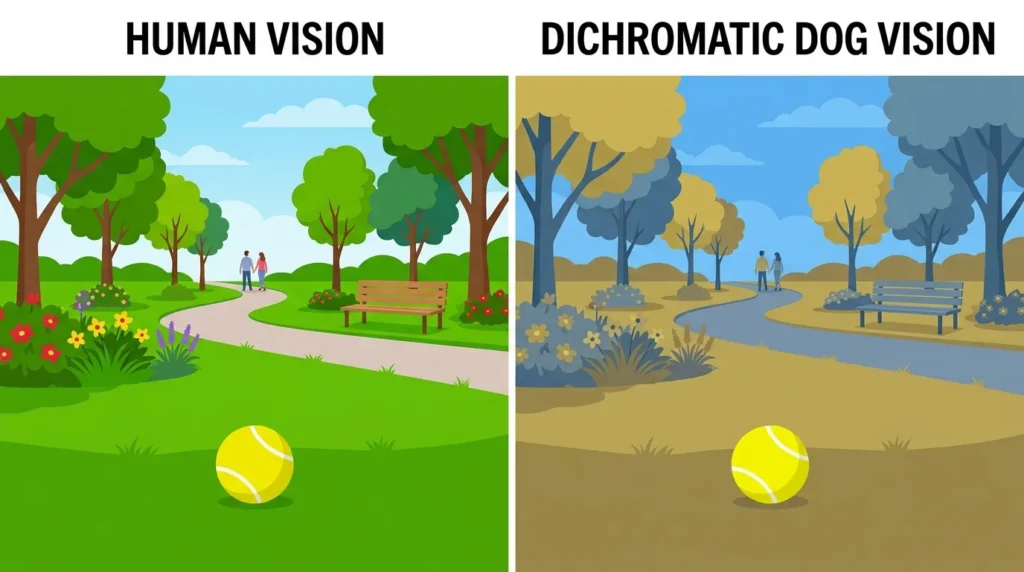
Human eyes have three types of color receptors: red, green, and blue. Dogs have two: blue and yellow. This makes them dichromats, similar to a human with red-green color blindness. They see yellow and blue clearly. They struggle with red and green, which both appear as dull yellowish-brown tones.
A standard tennis ball is optic yellow — a shade developed by the International Tennis Federation in 1972 to be visible on color television. It falls squarely in the yellow range that dogs see well. On grass — which dogs perceive as more brownish-yellow than green — a yellow tennis ball stands out sharply. Dogs don’t have trouble spotting it.
Red balls on green grass, by contrast, are much harder for them to track visually. If you’re curious how this compares to cat vision, the differences are notable — cats process color and movement differently than dogs do.
Frame Rate: Why Dogs Track Fast Movement Better Than We Do
Human eyes process roughly 20 frames per second. That’s the threshold at which our brains interpret still images as continuous motion. Dogs process around 70 frames per second. Their visual system essentially runs at a higher refresh rate than ours.
What this means practically: dogs detect fast-moving objects more clearly than humans do. A ball thrown at speed looks smoother and more trackable to a dog than to you. Their eyes are also positioned further to the sides of their heads, giving them a wider field of view — approximately 250 degrees compared to the human range of 180 degrees. They see the ball coming before you think they would.
Both adaptations are hunting tools. They’ve just found a second career in fetch. And if you’ve noticed your dog staring at you with that same locked-in intensity — that’s the same visual tracking system at work, just pointed at you instead of a ball.
The Smell, Texture, and Size Are a Perfect Sensory Match
Vision explains part of the obsession. Smell explains another big piece.
Rubber Scent and Fuzz: A Multi-Sense Experience
Dogs have roughly 300 million olfactory receptors. Humans have around 6 million. A dog’s sense of smell is estimated to be 10,000 to 100,000 times more sensitive than ours, depending on the compound being detected.
Tennis balls are made of vulcanized rubber, which has a strong and specific chemical scent. The pressurized air inside contains compounds that release slowly. The felt covering — a blend of wool and nylon — holds scent from the environment. Every time the ball lands on grass, it picks up new information: soil bacteria, other animal traces, environmental chemicals.
To a dog, a well-used tennis ball is dense with olfactory data. It’s interesting in a way a plain rubber ball isn’t.
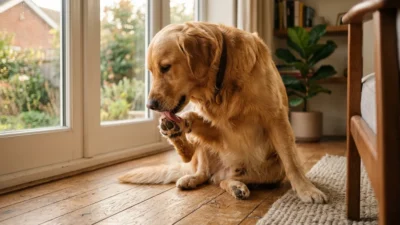
The felt surface also satisfies something in the mouth. Dogs explore the world orally. The fuzzy texture engages the tongue, lips, and gum line differently than smooth rubber. Many dogs will chew the fuzz off methodically before moving on — this is the “dissect” stage of the predatory sequence expressing itself. This oral exploration is also part of why dogs lick their paws — the mouth and tongue are primary sensory tools, not just eating implements.
2.7 Inches: Why the Size Fits
A standard tennis ball is 2.57–2.70 inches in diameter. This is large enough that most medium and large dogs can carry it comfortably without the risk of swallowing it, but small enough that it fits satisfyingly in the mouth. The slight compressibility of the pressurized ball also provides tactile feedback — it gives just enough when bitten.
Size matters more than most people think. Dogs are far more engaged with objects they can actually hold in their mouths. A ball that’s too large becomes frustrating. One that’s too small becomes a swallowing hazard and a source of anxiety rather than pleasure.
The Dopamine Loop That Makes Fetch Feel Addictive
Fetch isn’t just fun for dogs. For many dogs, it operates like a behavioral loop with genuine neurochemical hooks.
Anticipatory Dopamine vs. Reward Dopamine
Neuroscientist Robert Sapolsky’s research on dopamine revealed something counterintuitive: dopamine spikes before the reward, not just after it. The highest dopamine activity occurs during anticipation — when the outcome is uncertain but expected.
Dogs experience this during fetch. The moment you pick up the ball, dopamine starts rising. It peaks during the chase — when the outcome is still in play. Catching the ball triggers a second, smaller dopamine release. Then the cycle resets.
This anticipatory phase is why dogs whine and stare when you hold the ball. The wanting state is neurologically more intense than the getting state. The chase is the high. The catch is just the confirmation. The same anticipatory excitement explains why dogs howl before walks or play sessions — the brain is already firing before the event begins.
Contra-Freeloading: Why Dogs Prefer to Work for It
In 1963, psychologist Glen Jensen discovered that rats consistently chose to press a lever for food over freely available food in an adjacent bowl. He called this contra-freeloading. The behavior has since been documented in most species studied — including dogs.
Dogs find earned rewards more satisfying than free ones. Fetch delivers this. The dog works — sprints, tracks, retrieves — and earns the ball. That effort makes the reward register as more valuable neurologically. Giving a dog a pile of tennis balls to sit with rarely produces the same engagement as a single ball thrown repeatedly.
The game structure itself is part of what makes it work.
Why Some Dogs Are More Obsessed Than Others
Not every dog treats a tennis ball like oxygen. Breed lines explain most of the variation.
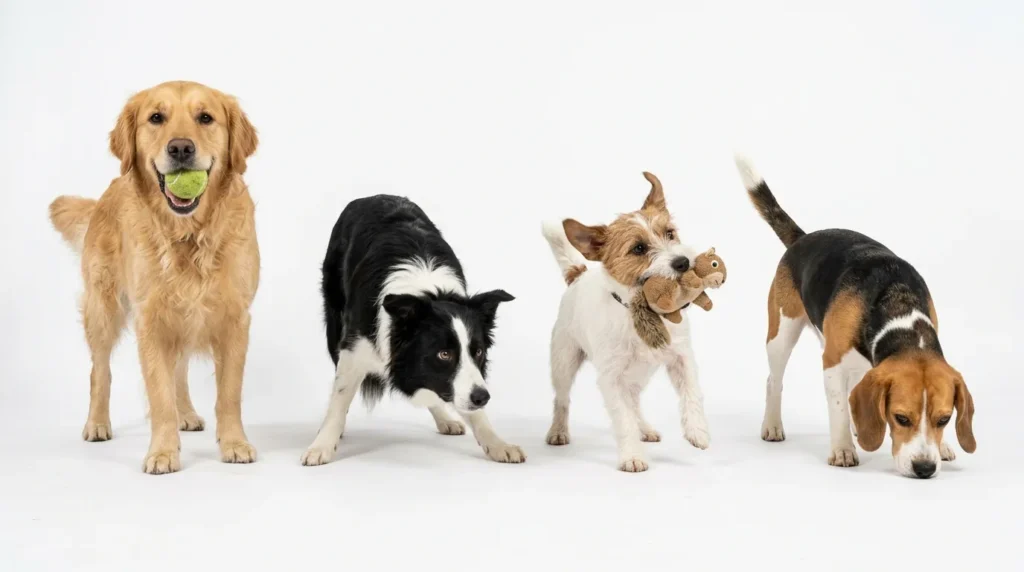
Retrievers — Golden Retrievers, Labrador Retrievers, Flat-Coated Retrievers — were bred specifically to carry objects in their mouths and return them. The “grab-bite and retrieve” portion of the predatory motor sequence was selectively amplified over generations. These dogs don’t just enjoy fetch. They are genetically calibrated for it. If you’re choosing a dog partly based on play drive, a breed finder quiz can help match energy levels and instincts to your lifestyle before you commit.
Border Collies and Australian Shepherds engage intensely because of their high herding drive, not retrieve drive. They chase obsessively but may not bring the ball back reliably.
Terriers were bred to track and kill small, fast animals. They respond strongly to the movement of the ball but often want to shake or destroy it rather than return it.
Scent hounds like Beagles are more nose-driven. They may retrieve the ball, then stop to sniff where it landed rather than bringing it back.
Genetic research has identified variation in the DRD4 dopamine receptor gene as a factor in novelty-seeking and reward sensitivity in dogs. Dogs with certain DRD4 variants show stronger motivation for stimulation-seeking behaviors — which includes intensive fetch play. This gene is found at higher frequencies in working and sporting breeds.
When Tennis Ball Obsession Becomes a Problem
Enthusiasm is normal. Obsession is different.
Signs that ball play has crossed into compulsive behavior: the dog cannot disengage when asked, ignores food, water, and pain signals during play, shows anxiety or aggression when the ball is taken away, loses interest in all other activities and stimulation, or self-injures from repetitive motion without stopping.
Compulsive fetch behavior is most common in Border Collies, but it appears in any breed with high drive. It’s often worsened by owners who use fetch as the primary or only form of exercise, which conditions the dopamine loop to run constantly. Understanding how much exercise your dog actually needs daily helps prevent this pattern from developing in the first place.
A dog that will not stop — even when limping, panting heavily, or visibly fatigued — needs the behavior addressed. If your dog is panting excessively after or during play sessions, that’s a signal to stop immediately and monitor. A veterinary behaviorist can assess whether this meets criteria for canine compulsive disorder, which is a documented clinical condition, not just enthusiasm.
Are Tennis Balls Actually Safe for Dogs?
The short answer: use caution, especially with heavy chewers.
Three real risks exist.
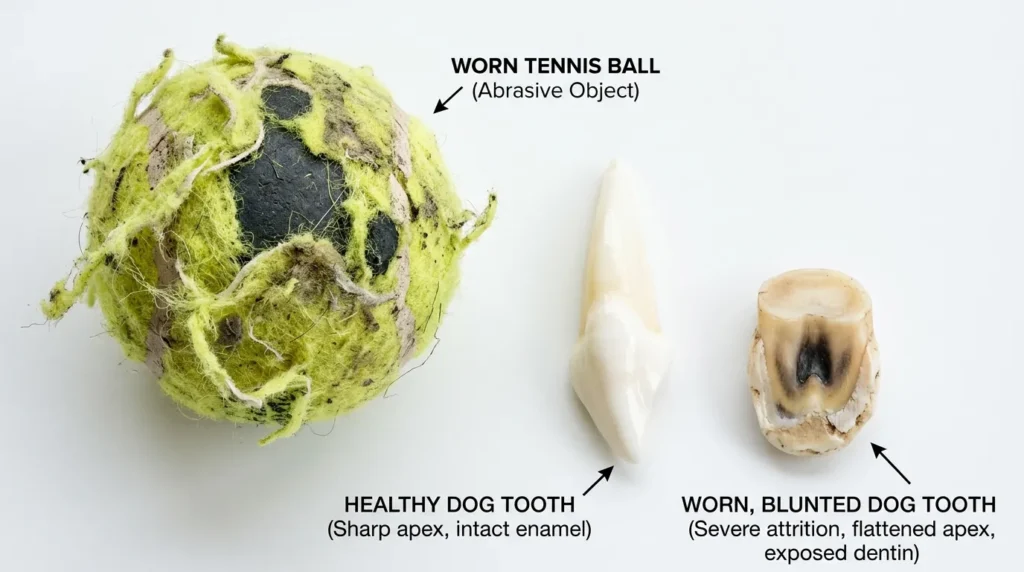
Tooth wear. Tennis ball felt is abrasive. It acts like fine sandpaper on tooth enamel over repeated chewing. Dogs that carry and chew tennis balls daily show measurable enamel erosion over time. Veterinary dentists refer to this as “blunting” — the cusps of the upper premolars wear flat. This is documented and preventable. Keeping up with regular tooth brushing helps you catch early wear and maintain enamel health between vet visits.
Choking hazard. Powerful chewers can compress and tear a tennis ball into chunks. A torn rubber piece can lodge in the throat or digestive tract. Dogs that destroy balls rather than retrieve them should not play with standard tennis balls unsupervised. If your dog ever swallows something concerning, know the steps for how to safely make a dog vomit — but always call your vet first.
Adhesives and materials. Standard tennis balls are not manufactured to pet safety standards. Some brands use adhesives that are not rated for animal contact. Pet-specific tennis balls are made without these adhesives and use safer felt compositions.
Safer Alternatives That Scratch the Same Itch
If your dog loves tennis balls but you have concerns, several products are made specifically for dogs and address the main risk areas.
West Paw Jive Ball — Rubber composition rated non-toxic, designed to resist cracking and chunking. No felt surface, so no abrasive enamel wear. Available in sizes for different breeds.
Kong Squeezz Ball — Natural rubber, textured surface that’s easier on teeth than felt, and includes a squeak to add auditory stimulation that dogs respond well to.
Chuckit! Ultra Ball — Made from natural rubber, no felt coating, designed to bounce erratically (retains the prey movement appeal). More durable than standard tennis balls.
Orbee-Tuff Ball by Planet Dog — Non-toxic, certified safe, highly durable. Slightly weighted for a satisfying carry. Good for dogs who like to hold the ball more than chase it.
All four retain the core appeal — size, bounce, carry — without the dental or safety concerns of standard tennis balls. Before introducing any new chew toy or treat, it’s worth running it through a pet food and product safety checker to flag any ingredient or material concerns for your specific dog.
How to Make Fetch Healthier and More Enriching
Fetch itself is fine. Unmanaged fetch every day for years is where problems develop.
Vary the game. Swap fetch with nose work, tug, or a sniff walk on alternating days. This prevents the dopamine loop from becoming the only reward system your dog responds to. If you notice your dog following you everywhere and showing restless behavior between play sessions, that’s a sign they need more mental variety, not just more fetch.
Set session limits. Ten to fifteen minutes of fetch is sufficient physical and mental exercise for most dogs. Longer sessions don’t add proportional benefit and accelerate joint wear in puppies and senior dogs.
Teach a reliable “drop it.” A dog that will drop the ball on command is a dog you can disengage before fatigue or arousal becomes problematic. Train this separately from the game, not during it. If you’re working on broader obedience, this step-by-step dog training guide covers foundational commands that make managing high-drive play much easier.
Use the ball as a training reward. Instead of throwing the ball continuously, ask for a sit, a down, or a stay before each throw. This adds mental work to the physical exercise and reinforces your role in the game. It also slows the pace naturally.
Rotate toys. Dogs show higher engagement with novel objects. Rotating between three or four toys maintains interest without requiring constant new purchases.
Conclusion
Dogs love tennis balls because the ball hits nearly every instinct they have — at the same time. The movement triggers the prey drive. The color is easy to track. The scent and texture engage the nose and mouth. The chase floods the brain with dopamine. And the effort required to earn the ball makes the reward feel worth it.
Understanding why the obsession happens makes it easier to manage. Keep the game structured. Watch for signs it’s crossed from enthusiasm into compulsion. Consider safer ball alternatives for heavy chewers. And if your dog stares at you every time you sit near the couch where the tennis balls are stored — now you know exactly why.